Summary. The European Union now mixes popular and state representation without organizing them as a coherent legislature, and it lets state representation be exercised inside the legislative process by national ministers. This article argues for a treaty-level bicameral reform: a more population-based Chamber of Representatives alongside a Senate in which member states are represented as equal constituent polities. The two chambers should be co-equal in ordinary legislation and should share legislative initiative. The article also works out how both chambers could be constituted, with particular attention to the lower chamber: it sets out an upper-chamber selection model and a lower-chamber electoral and districting reference model designed to produce a more population-based federal chamber without abandoning territorial clarity. The lower-chamber model aims at moderate pluralism, treats minority accommodation through limited districting safeguards rather than open-ended mapmaking discretion, and includes a reference map showing that the proposed rules can generate a coherent Union-wide lower-chamber geography. The argument is confined to the legislative order and does not attempt to settle the Union’s wider constitutional structure.
Suggested citation: Matthias Matthiesen, "A Bicameral Legislature for the European Union," matthias.matthiesen.eu/eurofed, v1.0, 31 March 2026.
Diagnosis of the Current Legislative Order
The EU’s current legislative order mixes two partly competing representative principles, member-state representation and popular representation, without assigning each of them a clean institutional form.
The Council is supposed to represent the member states in the legislative process, but under qualified majority voting a measure must be backed both by a threshold of member states and by member states representing a threshold of the Union’s population. The Council therefore does not represent the member states on a purely state basis. Under qualified majority, the population represented by the supporting member states also matters, importing an element of the popular principle into a body supposed to represent member states.
Because the Council is composed of national ministers, it is also not distinctly legislative in character. It is a forum of executive officeholders performing a legislative function, which blurs the line between legislative and executive power. This structure tends to channel political conflict through executive bargaining rather than ordinary legislative politics. Where unanimity applies, that logic becomes sharper still, because state protection takes the form of a national veto, allowing a single government to block legislation.
The European Parliament is supposed to represent citizens, but because seats are allocated through degressive proportionality between member states, citizens do not enjoy equal representational weight across the Union. That compromises the Parliament’s role as the Union’s chamber of popular representation.
That hybrid design is further distorted by a legislative process in which the ordinary right of initiative rests with the executive rather than the legislature. The European Commission alone has the power to propose laws. Under the ordinary legislative procedure, both co-legislators can amend proposals and both must approve the final text. But special legislative procedures reduce the Parliament to consultation or consent without amendment, and unanimity gives national governments vetoes in some fields. Accountability is also weaker: while the European Parliament’s proceedings are generally public, much of the Council’s decision-making still takes place through less public and less traceable executive bargaining.
The Proposed Reform
The collective legislature should be reconstituted as the Parliament of the European Union. Its lower chamber, the Chamber of Representatives, should be elected by the people and designed to come as close to population equality as the Union's federal structure allows. Its upper chamber, the Senate, should represent the member states as equal constituent polities rather than as weighted population blocs.
Both chambers should be co-equal in ordinary legislation. Each should be able to introduce legislation, and both should have to approve the same text before it becomes law. In a federation built from pre-existing states, equal state representation in the legislature forms part of the constitutional bargain by which states enter the federation. The Senate gives institutional expression to that bargain by guaranteeing the member states a place in Union lawmaking as continuing constituent polities. The Chamber of Representatives provides direct popular representation and Union-level democratic accountability. The Senate is democratic as well, but on a different representative basis.
If either chamber were confined to exceptional questions while the other handled ordinary legislation, one representative principle would be pushed to the margins of Union lawmaking. That problem persists even when the asymmetry is limited to particular fields, as it often is now. The limited chamber would be reduced to a reserve check instead of taking part in ordinary lawmaking on equal terms.
Conflict between popular and member-state majorities should be worked through inside a public legislature, not displaced into Commission agenda control, special procedures, or executive bargaining. Symmetry therefore requires a clear deadlock rule. If the two chambers cannot agree on a common text, the proposal should move to a public conciliation stage tasked with producing a single compromise draft. If conciliation succeeds, both chambers should vote on that text. If it fails, the proposal falls. Disagreement should have to pass through a visible parliamentary sequence.
The daily proceedings, debates, and votes of both chambers should be public and recorded, with narrow exceptions for sensitive or classified information. Both chambers should also have investigative powers, including the power to summon witnesses and compel testimony from Union officers. This should make legislative responsibility more public, more legible, and easier to trace than it is under the current settlement.
The settlement of constitutional essentials should be distinguished from implementing detail. The treaties should entrench the two chambers, the replacement of the Council by a Senate, the powers of each chamber, including the redistribution of initiative rights, and the basic representative principle of each chamber. They should also fix the core electoral guarantees that give those principles practical effect.
For the Chamber of Representatives, the treaties should entrench direct election by Union citizens aged 18 or over who are ordinarily resident in the constituency in which they vote, and eligibility for election for any Union citizen aged 21 or over, both subject to limited legal disqualifications consistent with the constitutional order. Membership of the chamber should be incompatible with executive office, judicial office, or membership of another legislative chamber.
The size of the Chamber of Representatives should remain consistent with both representational equality and legislative governability. The chamber should be large enough to permit a high degree of population equality within the constraints of the Union’s federal structure, but not so large as to impair its effective functioning as a deliberative and legislative body. For the purposes of this essay, the reference model assumes a chamber of 720 members, matching the size of the European Parliament in the 2024-2029 term. The law may determine the precise number of seats within those constitutional limits.
Its constitutional design should entrench election by the single transferable vote, or STV, the apportionment of seats first to member states, a guaranteed one-seat minimum for every member state, the rule that no district may cross a member-state border, the chamber’s fixed five-year term structure, the prohibition of dissolution before the end of a term, periodic reapportionment between member states to preserve equality of representation in light of population change, and the requirement that representation be made as equal among citizens as the Union’s federal structure allows. If a seat falls vacant during a term, the chamber should be required to order a by-election to fill that seat for the remainder of the term, and polling day should take place no later than 90 days after that decision.
Districting rules should require, where possible, respect for the territorial integrity of sub-state geographic polities recognised under the constitutional or legal order of the member state concerned, so that regional and local political identities are not ignored without reason while member states remain free to reconstitute their internal political geographies in accordance with their own constitutional order.
For the Senate, the treaties should entrench the equal representation of member states, the allotment of three senators to each member state, election by the lower or sole chamber of each member-state parliament, the chamber’s basic six-year staggered term structure, and incompatibility with executive office at either national or Union level. If a Senate seat falls vacant before the end of its term, the lower or sole chamber of the member-state parliament concerned should elect a replacement within 90 days for the remainder of the unexpired term.
Electoral timetables, counting mechanics within those constitutional bounds, the use and design of member-state districting commissions, the detailed districting hierarchy, the ordinary procedures of electoral districting, and the detailed procedure for Senate replacement and lower-chamber by-elections can then be left to implementing law. Judicial review of districting and lower-chamber elections should begin in the courts of the member state concerned, subject to review at Union level where questions of treaty compliance or federal electoral principle arise. Not every electoral detail needs to be constitutionalised, provided ordinary legislation cannot undo the system’s core constitutional logic.
Constitutional and Political Feasibility
The reform proposed here amounts to a treaty-level redesign and a constitutional refounding of the Union’s legislative order. If the Union is to become a democratic federal polity, it should separate the representation of citizens from the representation of member states by giving each a distinct institutional form, and it should improve the separation of powers by vesting state representation in a distinct federal legislative chamber rather than in national governments directly. The current treaties cannot reach that settlement by generous interpretation: they define the European Parliament as a degressively proportional assembly of Union citizens, the Council as a body of ministers representing member states, and Commission initiative as the ordinary basis of legislation. Its legislative core therefore requires treaty amendment at the level of institutional architecture.
Political feasibility does not turn on whether governments, parties, and publics would accept this proposal now. They likely would not. It turns on whether the proposal identifies a coherent federal settlement around which future conflict, bargaining, and constitutional choice could be organised. A serious federal proposal has to specify who is represented, how legislative conflict is handled, what requires treaty change, and what can be left to later law. This essay shows that such a settlement can be stated clearly, even if present political conditions are hostile to it.
Abolishing the Council as part of the legislative order would not end executive coordination. National executives could still coordinate administratively and intergovernmentally before and after legislation. What would end is their place inside the constitutional definition of the legislature and the conversion of executive bargains into legislative outcomes. The details of executive coordination therefore fall outside this essay, which is about legislative refoundation, not a full redesign of the executive.
At the level of actors, the main institutional resistance would likely come from national executives, because the reform strips the Council and the European Council of their central role in executive bargaining over Union law. Some smaller member states would likely also resist, despite Senate equality, because the lower chamber would be far more population-based than the current European Parliament. Nationalists and Eurosceptics would likely resist because the proposal assumes a federal transformation of the Union rather than rejecting one. The coalition most likely to support it would come from actors already committed to federal constitutional reform, not defenders of the present settlement.
Table 1. Institutional Structure of the Proposed Bicameral Legislature
| Institution | Role | Represents | Composition | Term | Election or appointment |
|---|---|---|---|---|---|
| Parliament of the European Union | Collective legislature | — | — | — | — |
| Chamber of Representatives | Lower chamber | People of the Union | 720 representatives | 5 years | Single transferable vote in member-state-bounded multi-member districts |
| Senate | Upper chamber | Member states as constituent polities | 3 senators per member state, 81 total | 6 years, staggered | Elected by the lower or sole chamber of each member-state parliament |
How the Two Chambers Are Chosen
The proposed bicameral legislature turns two different principles into two different selection rules. The Chamber of Representatives is elected by the public under a much more population-based apportionment. The Senate rests on the equality of the member states as constituent polities.
Representatives should be elected by the public in territorial districts for five-year terms using STV. Most districts should elect between three and six representatives, because that is the range where STV can combine meaningful proportionality with a recognisable territorial link. In the small number of fallback districts that return only one representative, the same ranked ballot should operate as instant-runoff voting: ranked choice remains, proportionality does not. The reference district model shows that such a lower-chamber map can be drawn while keeping districts inside member-state borders. That border rule, together with the narrow one-seat floor in apportionment, reflects the federal premise of the proposal: the Union does not rest on a unitary demos apart from its member states, and the lower chamber should therefore be as population-based as the federal order allows rather than organized as a borderless electorate.
Senators should be elected indirectly by the parliaments of the member states, not by governments and not by direct popular vote. The Senate is supposed to represent member states as constituent units of the Union, but governments are the wrong occupants: a chamber of ministers would simply reproduce the previously discussed executive bargaining in parliamentary dress. Direct election would blur the chamber's logic in a different way by turning it into a second popular chamber with only weaker foundations. Election by national parliaments gives state representation a parliamentary rather than executive form. The member states remain the represented units; national parliaments are the electing bodies because they provide democratic authorization without collapsing the upper chamber back into cabinet diplomacy.
Each member state should elect three senators serving six-year terms, with terms staggered so that one Senate seat from each member state comes up every two years. In unicameral systems, the sole chamber should elect the senator; in bicameral systems, the lower chamber should. The lower or sole chamber is the institution most consistently tied across the Union to general electoral accountability. Many domestic upper chambers, by contrast, are territorially weighted, indirectly constituted, politically weak, or otherwise constitutionally idiosyncratic. Because the Union Senate already secures equal member-state representation at federal level, there is no strong reason to import those divergent domestic second-chamber formulas into the selection process. Lower-chamber election keeps the electing body parliamentary and democratically visible while keeping heterogeneous national territorial logics out of a chamber whose equality is already fixed at Union level.
Three senators per member state is the smallest equal allotment that lets one seat from each member state come up every two years while leaving two continuing senators in place. One senator per member state would remove any internal plurality. Two would make each renewal replace half a delegation. Three therefore gives a minimal but real balance between continuity and turnover. It preserves the upper chamber as a body of equal member states without letting it swell into a second, indirectly chosen popular assembly.
Any member of the electing chamber should be able to nominate a candidate. On the first ballot, election should require an absolute majority of all members. For the next two weeks, further ballots could be held on the same basis. If no candidate had been elected by the end of that period, a final ballot should be decided by plurality. The rule is therefore majoritarian, not proportional to the parliamentary balance. It will often reflect the governing majority or governing bargain, though not always. In minority-parliament situations, or where coalition discipline is weaker, other candidacies may emerge.
The Senate is not meant to reproduce, member state by member state, a miniature proportional portrait of domestic party pluralism. Its purpose is to give the member states, as enduring constitutional units, a parliamentary and non-executive form of representation in federal legislation. On that baseline, the relevant comparison is the current Council, whose members are national governments themselves. Election by the national lower or sole chamber does not worsen that condition. It parliamentarizes and partly democratizes it, while fixed terms, staggered renewal, and incompatibility with executive office stop the chamber from collapsing into a day-to-day extension of current governments. The plurality fallback is a last-resort deadlock rule, not the ordinary democratic principle of Senate selection.
Senators should hold independent terms. Early dissolution of the electing chamber should not terminate a Senate mandate. If a Senate seat fell vacant before the end of its term, the lower or sole chamber of the member-state parliament concerned should elect a replacement within 90 days for the remainder of the unexpired term, so that the staggered cycle remained intact.
Eligibility for election should extend to any Union citizen aged 35 or over, subject to limited legal disqualifications consistent with the constitutional order. A senator may be elected from within the national parliament, but could not hold both offices at once. Senate membership should be incompatible with executive office, judicial office, or membership of another legislative chamber.
The core constitutional choices are the represented unit, the equal allotment, the electing body, the election rule, and the term structure. Administrative details can remain matters of implementing law, but the Senate’s representative principle should not.
Parliament of the European Union
Senate (Upper Chamber)
Chamber of Representatives (Lower Chamber)
Representation Across Both Chambers
The Chamber of Representatives is much more population-based than the current European Parliament. The Senate, by contrast, is a member-state chamber in which every member state gets three senators. The system as a whole therefore still gives smaller member states greater representational weight relative to population than larger ones. That is a deliberate aspect of the federal constitutional design.
To compare those consequences, this section uses a country-level representation quotient, or RQ. An RQ of 1.000 means exact population parity within a chamber, measured against that chamber’s own average population per seat. Values above 1.000 indicate relative over-representation; values below 1.000 indicate under-representation. These are chamber-level country measures, not measures of district equality within member states. The appendix therefore uses a different metric, the district parity quotient, or DPQ, for lower-chamber district equality.
The combined figure reported below is only a heuristic. It averages the two chamber-level RQs under equal formal weighting. It does not measure total political influence, which would depend on agenda control, interchamber bargaining, and the practical use of bicameral power. Its purpose is narrower: to show the distributive pattern that follows from the proposal’s premise that both chambers have equal formal legislative status.
Current European Parliament range
0.718 - 6.648
Country-level RQ range in the current European Parliament.
Lower-chamber range
0.882 - 1.292
Country-level RQ range in the proposed Chamber of Representatives.
Combined heuristic range
0.597 - 15.327
Heuristic country-level range under equal formal weighting of both chambers.
Lower chamber
At the country level, the lower chamber comes much closer to population parity than the current European Parliament. In this model, the highest lower-chamber representation quotient is Cyprus 1.292, while the lowest is Slovenia 0.882.
Senate and combined heuristic
The Senate deliberately departs from population parity. Its highest representation quotient is Malta 29.546, while its lowest is Germany 0.200. If both chambers are given equal formal weight as a heuristic, the highest combined quotient is Malta 15.327, while the lowest is Germany 0.597. That combined figure should be read as a summary of formal bicameral weighting, not as a proxy for the total political power of each member state.
Table 2. Country-Level Representation-Quotient Range Across the Current Parliament and the Proposed Bicameral System
| System | Highest country RQ | Lowest country RQ | Meaning |
|---|---|---|---|
| Current European Parliament | Malta (MT) 6.648 | Germany (DE) 0.718 | Current Parliament seat allocation by country. |
| Chamber of Representatives | Cyprus (CY) 1.292 | Slovenia (SI) 0.882 | Population-based lower chamber with a narrow one-seat state floor. |
| Senate | Malta (MT) 29.546 | Germany (DE) 0.199 | Equal-state upper chamber with three senators per member state. |
| Combined heuristic | Malta (MT) 15.327 | Germany (DE) 0.597 | Equal formal weighting of both chambers; a constitutional heuristic rather than a direct measure of legislative influence. |
The summary above gives the overall range. The table below shows the same trade-off country by country, with the current European Parliament included for comparison. The final column is a formal bicameral heuristic, not an empirical measure of bargaining power under all legislative conditions.
Open Table 3. Current European Parliament Representation and the Proposed Lower Chamber, Compared by Country
Table 3. Current European Parliament Representation and the Proposed Lower Chamber, Compared by Country| Country | Pop. | Dist. | Reps. | People / rep. | Lower-chamber RQ | Current EPseats | Seat Δ | Current EPpeople / seat | Current EPRQ | Senators | Senate RQ | Combinedheuristic RQ |
|---|---|---|---|---|---|---|---|---|---|---|---|---|
| Austria (AT) | 9,158,750 | 3 | 15 | 610,583 | 1.022 | 20 | -5 | 457,938 | 1.363 | 3 | 1.818 | 1.420 |
| Belgium (BE) | 11,817,096 | 4 | 19 | 621,952 | 1.004 | 22 | -3 | 537,141 | 1.162 | 3 | 1.409 | 1.206 |
| Bulgaria (BG) | 6,445,481 | 2 | 10 | 644,548 | 0.969 | 17 | -7 | 379,146 | 1.647 | 3 | 2.583 | 1.776 |
| Croatia (HR) | 3,861,967 | 1 | 6 | 643,661 | 0.970 | 12 | -6 | 321,831 | 1.940 | 3 | 4.311 | 2.640 |
| Cyprus (CY) | 966,365 | 1 | 2 | 483,182 | 1.292 | 6 | -4 | 161,061 | 3.876 | 3 | 17.227 | 9.259 |
| Czechia (CZ) | 10,900,555 | 4 | 17 | 641,209 | 0.974 | 21 | -4 | 519,074 | 1.203 | 3 | 1.527 | 1.250 |
| Denmark (DK) | 5,961,249 | 2 | 10 | 596,125 | 1.047 | 15 | -5 | 397,417 | 1.571 | 3 | 2.793 | 1.920 |
| Estonia (EE) | 1,374,687 | 1 | 2 | 687,344 | 0.908 | 7 | -5 | 196,384 | 3.179 | 3 | 12.110 | 6.509 |
| Finland (FI) | 5,603,851 | 2 | 9 | 622,650 | 1.003 | 15 | -6 | 373,590 | 1.671 | 3 | 2.971 | 1.987 |
| France (FR) | 68,669,303 | 25 | 110 | 624,266 | 1.000 | 81 | +29 | 847,769 | 0.736 | 3 | 0.242 | 0.621 |
| Germany (DE) | 83,456,045 | 32 | 133 | 627,489 | 0.995 | 96 | +37 | 869,334 | 0.718 | 3 | 0.199 | 0.597 |
| Greece (EL) | 10,375,764 | 4 | 17 | 610,339 | 1.023 | 21 | -4 | 494,084 | 1.264 | 3 | 1.604 | 1.314 |
| Hungary (HU) | 9,584,627 | 3 | 15 | 638,975 | 0.977 | 21 | -6 | 456,411 | 1.368 | 3 | 1.737 | 1.357 |
| Ireland (IE) | 5,351,681 | 2 | 9 | 594,631 | 1.050 | 14 | -5 | 382,263 | 1.633 | 3 | 3.111 | 2.080 |
| Italy (IT) | 58,971,230 | 24 | 94 | 627,354 | 0.995 | 76 | +18 | 775,937 | 0.805 | 3 | 0.282 | 0.639 |
| Latvia (LV) | 1,871,882 | 1 | 3 | 623,961 | 1.001 | 9 | -6 | 207,987 | 3.002 | 3 | 8.893 | 4.947 |
| Lithuania (LT) | 2,885,891 | 1 | 5 | 577,178 | 1.082 | 11 | -6 | 262,354 | 2.380 | 3 | 5.769 | 3.425 |
| Luxembourg (LU) | 672,050 | 1 | 1 | 672,050 | 0.929 | 6 | -5 | 112,008 | 5.574 | 3 | 24.771 | 12.850 |
| Malta (MT) | 563,443 | 1 | 1 | 563,443 | 1.108 | 6 | -5 | 93,907 | 6.648 | 3 | 29.546 | 15.327 |
| Netherlands (NL) | 17,942,942 | 6 | 29 | 618,722 | 1.009 | 31 | -2 | 578,805 | 1.079 | 3 | 0.928 | 0.968 |
| Poland (PL) | 36,620,970 | 12 | 59 | 620,694 | 1.006 | 53 | +6 | 690,962 | 0.903 | 3 | 0.455 | 0.730 |
| Portugal (PT) | 10,639,726 | 4 | 17 | 625,866 | 0.997 | 21 | -4 | 506,654 | 1.232 | 3 | 1.565 | 1.281 |
| Romania (RO) | 19,067,576 | 7 | 30 | 635,586 | 0.982 | 33 | -3 | 577,805 | 1.080 | 3 | 0.873 | 0.928 |
| Slovakia (SK) | 5,424,687 | 2 | 9 | 602,743 | 1.036 | 15 | -6 | 361,646 | 1.726 | 3 | 3.069 | 2.052 |
| Slovenia (SI) | 2,123,949 | 1 | 3 | 707,983 | 0.882 | 9 | -6 | 235,994 | 2.645 | 3 | 7.838 | 4.360 |
| Spain (ES) | 48,619,695 | 20 | 78 | 623,329 | 1.002 | 61 | +17 | 797,044 | 0.783 | 3 | 0.342 | 0.672 |
| Sweden (SE) | 10,551,707 | 4 | 17 | 620,689 | 1.006 | 21 | -4 | 502,462 | 1.242 | 3 | 1.578 | 1.292 |
The Lower-Chamber Electoral Model
This proposal adopts the single transferable vote, or STV, the multi-member form of ranked-choice voting, because it can combine candidate choice, medium-scale proportionality, and recognisable territorial districts better than a single at-large electoral arena. Voters rank candidates in order of preference, and seats are filled through successive counts and transfers rather than by treating a single party list as the only meaningful unit. That makes STV attractive for a federal lower chamber: it preserves a direct link between representatives and places while allowing outcomes that are more proportional than plurality systems usually produce.
Under this proposal, voters should cast a single ranked candidate ballot. Parties could nominate multiple candidates in a district, and independents could run under a common signature requirement. Seats should be allocated by the Droop quota, the vote total needed to win a seat under STV, with surpluses and eliminations transferred by next usable preference under a harmonized Union-wide counting rule. The point of harmonization is not to centralize election administration. It is to stop materially different national variants from being treated as if they were one system. Those rules belong in the electoral law of the revised chamber, not in treaty text.
STV makes the most sense when compared with the plausible alternatives. Relative to open-list proportional representation, it gives up some simplicity and some list-level proportionality in exchange for more voter control over candidate order and less dependence on party lists as the sole link between voters and representatives. Relative to mixed-member designs, it avoids splitting the chamber into district and list tiers or layering a compensation mechanism onto a Union that is already apportioning seats by member state. For a lower chamber meant to be territorial, candidate-centered, and more population-based within a federal union, that combination is the better fit.
In medium-sized districts, STV can widen voter choice, allow competition both within and across parties, and reduce some forms of vote splitting because lower preferences still matter. But those effects depend on district magnitude, nomination practices, party coordination, and the exact counting rules. STV should be defended for what it can do under these conditions, not treated as a cure-all.
The map relies mostly on three- to six-seat districts, with two-seat and seven-seat cases at the edge and a very small number of single-seat fallbacks. Those magnitudes are compatible with STV, but they do not produce the very low effective thresholds associated with large-list proportional systems. The proposed lower chamber is therefore better described as moderately proportional and territorially grounded than as maximally proportional. In the narrow fallback cases where the model produces only one seat, the same ranked ballot becomes the single-winner form of ranked-choice voting, often called instant-runoff voting. Ranked choice remains. Proportionality does not.
Under STV, the notional threshold for winning one seat is the Droop quota, approximately 100 / (M + 1) for a district of magnitude M. For a list-based proportional system with the same district magnitude, the guaranteed one-seat threshold is broadly similar. The decisive variable is therefore usually district magnitude, not the label STV or proportional representation by itself. Table 4 translates the proposed magnitude structure into percentage terms.
Table 4. Lower-Chamber District Magnitudes and Approximate One-Seat Thresholds
| District magnitude | Approx. STV quota | Same-magnitude list-PR threshold | Proposed districts | Proposed seats |
|---|---|---|---|---|
| 1 | >50.0% | >50.0% | 4 | 4 |
| 2 | >33.3% | >33.3% | 17 | 34 |
| 3 | >25.0% | >25.0% | 31 | 93 |
| 4 | >20.0% | >20.0% | 41 | 164 |
| 5 | >16.7% | >16.7% | 45 | 225 |
| 6 | >14.3% | >14.3% | 24 | 144 |
| 7 | >12.5% | >12.5% | 8 | 56 |
The proposal's threshold environment is concentrated in the middle magnitudes: 141 of 170 districts, containing 626 of 720 seats, fall in the 3- to 6-seat range. Most of the chamber therefore sits in a notional one-seat threshold band of roughly 14.3% to 25.0%.
In most member states, the current European Parliament election is held either in a single national district or in a small number of large regional districts. That makes the current threshold environment much looser than the one proposed here. Ireland and Malta already use STV, so the electoral formula itself is not alien to Union practice. The real discontinuity lies in district size and seat allocation. Belgium, Italy, and Poland are the closest current comparators because they already regionalize the vote, but even there the proposed model usually works with smaller district magnitudes than the current European Parliament election.
In Table 5, each comparison cell reports the electoral model, district structure, and approximate one-seat threshold. Structure is stated consistently as territorial units first, then seats attached to each unit. Where current systems use labels such as colleges or constituencies, those labels are retained. What matters for comparison, however, is the number of electoral units and the seat magnitudes attached to them, not the vocabulary each system uses. PR is shorthand for proportional representation.
Open Table 5. Current European Parliament Rules and the Proposed Lower-Chamber Model, Compared by Country
Table 5. Current European Parliament rules and the proposed lower-chamber model, compared by country
| Country | Current European Parliament | Proposed lower chamber |
|---|---|---|
| Austria (AT) | National PRStructure: 1 district of 20 seatsThreshold: ~4.8% | STVStructure: 1 district of 3 seats, 1 of 5, 1 of 7Threshold: ~12.5-25.0% |
| Belgium (BE) | Preferential PRStructure: 3 colleges, 1 district of 13 seats, 1 of 8, 1 of 1Threshold: ~7.1-50.0% | STVStructure: 1 district of 2 seats, 1 of 5, 2 of 6Threshold: ~14.3-33.3% |
| Bulgaria (BG) | National PRStructure: 1 district of 17 seatsThreshold: ~5.6% | STVStructure: 2 districts of 5 seatsThreshold: ~16.7% |
| Cyprus (CY) | National PRStructure: 1 district of 6 seatsThreshold: ~14.3% | STVStructure: 1 district of 2 seatsThreshold: ~33.3% |
| Czechia (CZ) | National PRStructure: 1 district of 21 seatsThreshold: ~4.5% | STVStructure: 3 districts of 4 seats, 1 of 5Threshold: ~16.7-20.0% |
| Germany (DE) | National PRStructure: 1 district of 96 seatsThreshold: ~1.0% | STVStructure: 2 districts of 2 seats, 10 of 3, 7 of 4, 8 of 5, 4 of 6, 1 of 7Threshold: ~12.5-33.3% |
| Denmark (DK) | National PRStructure: 1 district of 15 seatsThreshold: ~6.2% | STVStructure: 2 districts of 5 seatsThreshold: ~16.7% |
| Estonia (EE) | National PRStructure: 1 district of 7 seatsThreshold: ~12.5% | STVStructure: 1 district of 2 seatsThreshold: ~33.3% |
| Greece (EL) | National PRStructure: 1 district of 21 seatsThreshold: ~4.5% | STVStructure: 1 district of 2 seats, 1 of 4, 1 of 5, 1 of 6Threshold: ~14.3-33.3% |
| Spain (ES) | National PRStructure: 1 district of 61 seatsThreshold: ~1.6% | STVStructure: 3 districts of 2 seats, 6 of 3, 5 of 4, 3 of 5, 2 of 6, 1 of 7Threshold: ~12.5-33.3% |
| Finland (FI) | National open-list PRStructure: 1 district of 15 seatsThreshold: ~6.2% | STVStructure: 1 district of 4 seats, 1 of 5Threshold: ~16.7-20.0% |
| France (FR) | National PRStructure: 1 district of 81 seatsThreshold: ~1.2% | STVStructure: 1 district of 1 seat, 1 of 2, 4 of 3, 7 of 4, 6 of 5, 5 of 6, 1 of 7Threshold: ~12.5-50.0% |
| Croatia (HR) | National PRStructure: 1 district of 12 seatsThreshold: ~7.7% | STVStructure: 1 district of 6 seatsThreshold: ~14.3% |
| Hungary (HU) | National PRStructure: 1 district of 21 seatsThreshold: ~4.5% | STVStructure: 1 district of 4 seats, 1 of 5, 1 of 6Threshold: ~14.3-20.0% |
| Ireland (IE) | STVStructure: 3 constituencies, 2 districts of 5 seats, 1 of 4Threshold: ~16.7-20.0% | STVStructure: 1 district of 4 seats, 1 of 5Threshold: ~16.7-20.0% |
| Italy (IT) | Preferential PRStructure: 5 constituencies, 1 district of 20 seats, 1 of 18, 2 of 15, 1 of 8Threshold: ~4.8-11.1% | STVStructure: 5 districts of 2 seats, 5 of 3, 6 of 4, 4 of 5, 3 of 6, 1 of 7Threshold: ~12.5-33.3% |
| Lithuania (LT) | National PRStructure: 1 district of 11 seatsThreshold: ~8.3% | STVStructure: 1 district of 5 seatsThreshold: ~16.7% |
| Luxembourg (LU) | National PRStructure: 1 district of 6 seatsThreshold: ~14.3% | STVStructure: 1 district of 1 seatThreshold: ~50.0% |
| Latvia (LV) | National open-list PRStructure: 1 district of 9 seatsThreshold: ~10.0% | STVStructure: 1 district of 3 seatsThreshold: ~25.0% |
| Malta (MT) | STVStructure: 1 district of 6 seatsThreshold: ~14.3% | STVStructure: 1 district of 1 seatThreshold: ~50.0% |
| Netherlands (NL) | National PRStructure: 1 district of 31 seatsThreshold: ~3.1% | STVStructure: 1 district of 2 seats, 1 of 3, 1 of 5, 2 of 6, 1 of 7Threshold: ~12.5-33.3% |
| Poland (PL) | Preferential PRStructure: 13 variable-seat constituenciesThreshold: 5.0% legal, district threshold varies | STVStructure: 1 district of 3 seats, 3 of 4, 5 of 5, 2 of 6, 1 of 7Threshold: ~12.5-25.0% |
| Portugal (PT) | National PRStructure: 1 district of 21 seatsThreshold: ~4.5% | STVStructure: 1 district of 1 seat, 2 of 5, 1 of 6Threshold: ~14.3-50.0% |
| Romania (RO) | National PRStructure: 1 district of 33 seatsThreshold: ~2.9% | STVStructure: 5 districts of 4 seats, 2 of 5Threshold: ~16.7-20.0% |
| Sweden (SE) | National PRStructure: 1 district of 21 seatsThreshold: ~4.5% | STVStructure: 1 district of 2 seats, 1 of 3, 1 of 5, 1 of 7Threshold: ~12.5-33.3% |
| Slovenia (SI) | National PRStructure: 1 district of 9 seatsThreshold: ~10.0% | STVStructure: 1 district of 3 seatsThreshold: ~25.0% |
| Slovakia (SK) | National PRStructure: 1 district of 15 seatsThreshold: ~6.2% | STVStructure: 1 district of 4 seats, 1 of 5Threshold: ~16.7-20.0% |
This table tracks approximate one-seat thresholds, not a full effective-threshold model. For STV the benchmark is the Droop quota; for same-magnitude list PR the guaranteed one-seat threshold is similar. The table therefore isolates the effect of district magnitude. It abstracts from transfers, party strategy, remainder effects, and statutory thresholds, except where the current European Parliament model makes those thresholds part of the comparison itself. Italy's current European election also applies a 4% legal threshold, and Poland's current system applies a 5% legal threshold while leaving constituency seat counts variable with turnout.
Relative to the current European Parliament election, the proposed model would raise the threshold environment in most member states, often sharply, because it replaces national or very large regional constituencies with mostly 3- to 6-seat districts. The contrast is strongest in large states that now vote in a single national arena, such as Germany, Spain, France, the Netherlands, and Romania. Ireland is the clearest continuity case: because it already uses STV in 4- and 5-seat constituencies, the proposed model leaves its threshold range broadly unchanged. Belgium, Italy, and Poland sit between those poles. They already regionalize the vote, but the proposed lower-chamber model still tends to use smaller district magnitudes and therefore higher thresholds for entry. A small number of 1-seat and 2-seat cases remain at the high end as acknowledged federal fallbacks, not as the chamber’s ordinary pattern. Given the proposed magnitude distribution, the likelier result is a moderately plural rather than highly fragmented party system, though that remains contingent on nomination strategy, transfer patterns, and party coordination.
In the short to medium term, competition would still be organized mainly by national parties, because districts remain inside member states and candidate selection would still be nationally structured. STV would nonetheless change incentives within that setting. Parties would have to manage candidate balance and transfers more carefully, intraparty competition would become more salient, and smaller parties would need either geographically concentrated support or favorable transfer paths to turn votes into seats. Coalition formation at federal level would therefore likely stay centered on medium and larger party families rather than on highly fragmented micro-party bargaining. The existing Europarties, understood here as federations of national parties at European level, would likely remain important vehicles of parliamentary coordination. Over time, however, the exercise of meaningful power at federal level could create incentives for more integrated pan-European parties with national branches rather than looser federations of national parties. National party politics would remain central at first, but the proposal would put it under stronger pressure toward European-level organization.
Because the Union does not rest on a unitary demos apart from its member states, the popular chamber should not be designed as if those member states and the recognised territorial units within them had ceased to matter constitutionally. Citizens carry layered political identities running from local and regional attachments through the member state to the European level. The lower chamber should therefore be as population-based as the federal order allows, but not organized as a borderless electorate.
For the same reason, the proposal rejects transnational districts. They would cross the constitutional boundaries of the federation’s constituent polities.
The proposal also rejects a zero-floor or more openly state-mediated lower chamber. Even though the Senate is the chamber of equal member states, the Chamber of Representatives should still ensure that each member state remains present within the Union’s representative order. Keeping a one-seat minimum ensures the continued existence of the member states as constituent units within direct popular representation at Union level, while keeping the lower chamber from reproducing the Senate’s state principle in weaker form.
The Lower-Chamber Districting Sequence
The lower-chamber districting sequence in this reference model starts from four constraints. Two follow directly from the constitutional design already set out: seats are first apportioned to member states, and no district may cross a member-state border. A third follows from the requirement that districting should, where possible, respect existing recognised territorial units within member states. In this reference model, that requirement is operationalised through the nested NUTS territorial hierarchy rather than through freehand line drawing. The remaining constraints are implementing choices made for this model rather than treaty essentials. Because the chamber is built for STV, the model treats 3 to 6 seats as the preferred district range, allows 2-seat and 7-seat districts only at the edge, and reserves 1-seat districts for narrow fallback cases. For the purposes of this reference model, 720 seats are allocated among the member states using base-1 Webster apportionment: each member state gets one seat first, and the rest are then apportioned by population under the Webster formula.
Districting within each member state follows an ordered sequence rather than an open-ended balancing exercise. First, the member-state border is absolute: no district may cross it. Second, districts should come as close as practicable to the population target implied by the state’s seat total while staying within the preferred 3- to 6-seat range wherever possible. Third, the model favors territorial inheritance: it keeps the highest viable NUTS unit whole where it can. Fourth, if a unit is too large, the search moves down to the next NUTS level instead of splitting it arbitrarily; if a unit is too small, it is merged first with contiguous siblings inside the same parent shell, not across that shell. Fifth, contiguity is required throughout. Sixth, below-NUTS3 local review is allowed only after those higher-ranked rules are exhausted, and even then only to choose among otherwise admissible options. Seventh, territorial legibility matters, but only inside that narrowed space; it is not a free-standing override.
The sequence also needs an administering authority. Under subsidiarity, the reference model does not rely on a single Union-level map-drawing body. It assumes instead that districting should be carried out within each member state under Union legislation setting the common criteria, the review cycle, transparency requirements, and the available avenues of challenge. Whether member states use independent commissions, courts, or another institution is left here to implementing law. The governing criteria must be federal even if the primary institutions applying them remain state-based.
Exceptions come last and remain limited. Islands, remote territories, exclaves, embedded-polity cases, and autonomy cases are treated as explicit exception classes because they raise recurrent problems that ordinary NUTS logic cannot solve cleanly. Linguistic and minority considerations enter chiefly through those inherited territorial units and explicit autonomy exceptions, not through an open-ended community-of-interest override. A general minority or linguistic override would reopen exactly the kind of discretion the rule hierarchy is meant to constrain. The model offers a rule-governed demonstration of how a Union-wide map can be generated and defended, not a claim that every boundary should be frozen forever.
Districting is only a limited instrument of minority accommodation. It can recognize minority and linguistic claims when they are territorially legible, constitutionally salient, and compatible with the model's broader commitments to equality, contiguity, and administrability. It cannot serve as a general compensatory device for every dispersed or non-territorial claim. Where minority or linguistic communities coincide with viable territorial units or autonomy structures, the model can respect that fact. Where they are too small, too dispersed, or territorially non-viable, districting cannot plausibly solve the problem without sacrificing the model's commitments to population equality, contiguity, and administrability. Åland is not assigned its own district because, within a relatively small member state and under the general seat-range rules, it is too small to form a viable district of its own. That does not worsen the present European Parliament arrangement, which likewise gives Åland no separate seat. A member state could justify a different fallback exception if it reasoned it openly within the governing criteria, but the reference model does not treat separate district status as an automatic entitlement. Minority protection in a federation therefore has to rest not only on districting, but also on the wider liberal-democratic constitutional order: civil rights, linguistic guarantees, autonomy where applicable, and judicial protection.
Two concrete examples show how the ordinary sequence works before any exception rule is invoked. At NUTS 2 level, the model resolves BE22 (Prov. Limburg (BE)) inside BE2 (Vlaams Gewest) by merging it with sibling BE21 (Prov. Antwerpen), producing a combined quota of about 4.56 seats rather than looking across the NUTS 1 boundary into BE3 (Walloon Region), most obviously toward neighboring BE33 (Prov. Liège). At NUTS 3 level, inside DEA1 (Düsseldorf), an early local merge joins DEA18 (Remscheid, Kreisfreie Stadt) to the touching sibling DEA1A (Wuppertal, Kreisfreie Stadt) rather than jumping to non-touching DEA11 (Düsseldorf, Kreisfreie Stadt). In both cases the search stays inside the rule sequence before falling back on narrower discretion.
Limited Exceptions
Most districts can be built through the ordinary regional hierarchy alone. Departures from that sequence are kept narrow and explicit. Instead of opening a broad escape hatch for convenience or visual neatness, the model limits them to a short named list: islands, remote territories, embedded-polity cases, exclaves, and autonomy cases.
Open Table 6. Limited Exception Classes in the Lower-Chamber Districting Model
Table 6. Limited Exception Classes in the Lower-Chamber Districting Model
| Case type | Examples | Why it exists |
|---|---|---|
| One-seat country fallback | Luxembourg; Malta | No district may cross a member-state border. So if a member state receives only the guaranteed minimum of one lower-chamber seat, the whole country necessarily becomes a single district. |
| Island and remote districts kept whole | Corsica; Balearic Islands; Aegean islands and Crete; Azores and Madeira | These were kept as island or remote districts where mainland attachment would have departed more sharply from the territorial hierarchy than a small insular district. |
| Near-mainland autonomous island attachment | Åland | Åland is an autonomous island territory very close to mainland Finland. The model acknowledges that this differs from the autonomy exceptions used elsewhere, but it still attaches Åland to a southern Finnish host district because its population is far below the ordinary threshold for a district of its own. |
| Embedded city-state attachment | Bremen | Bremen is a very small state inside the wider Lower Saxony area. The model therefore attaches it to a contiguous Lower Saxony host district rather than treating it as a standalone district. |
| Small border-state attachment | Saarland | Saarland is a small western border state, and the model attaches it to a contiguous western Rheinland-Pfalz host district rather than leaving it as an undersized district on its own. |
| Exclave attachment | Ceuta; Melilla | Ceuta and Melilla are Spanish exclaves on the North African coast. The model therefore handles them through explicit host-district attachment rather than pretending they are ordinary mainland districts. |
| Autonomy-based exceptions | Bolzano/Bozen + Trento; Friuli-Venezia Giulia | Two Italian autonomy cases were kept whole because constitutional status and territorial coherence outweighed the ordinary pressure to attach them elsewhere. |
These attachment cases are not all the same. Åland is a near-mainland autonomous island case, Bremen is an embedded city-state case, Saarland is a small western border-state case, and Ceuta and Melilla are exclave cases. The model separates them so that each departure from the ordinary rule is justified by geography or constitutional status, not waved through under one catch-all discretion clause.
Seven Areas Requiring Closer Local Review
Seven large metropolitan or regional cases needed closer local review below NUTS 3. They are included to show how the rule hierarchy works once the ordinary NUTS sequence runs out, not to license freehand redrawing of large urban areas. In these places the reference model used bounded judgment, informed where possible by finer local boundaries and existing electoral geography, but only after the higher-ranked criteria had already narrowed the admissible options. Because there is no common Union-wide hierarchy below that level, and because authoritative local polity information is not equally well defined across all cases, these areas could not be resolved programmatically in the same way as the higher-order sequence. Where usable local political geography existed, the model relied on it. Where it did not, it had to lean more heavily on contiguity and physical geography, which are weaker guides. A knowledgeable districting authority acting under subsidiarity should be able to apply the same principles on the ground with better local knowledge. These cases suggest workable subregional groupings. They do not add a separate criterion for drawing lines.
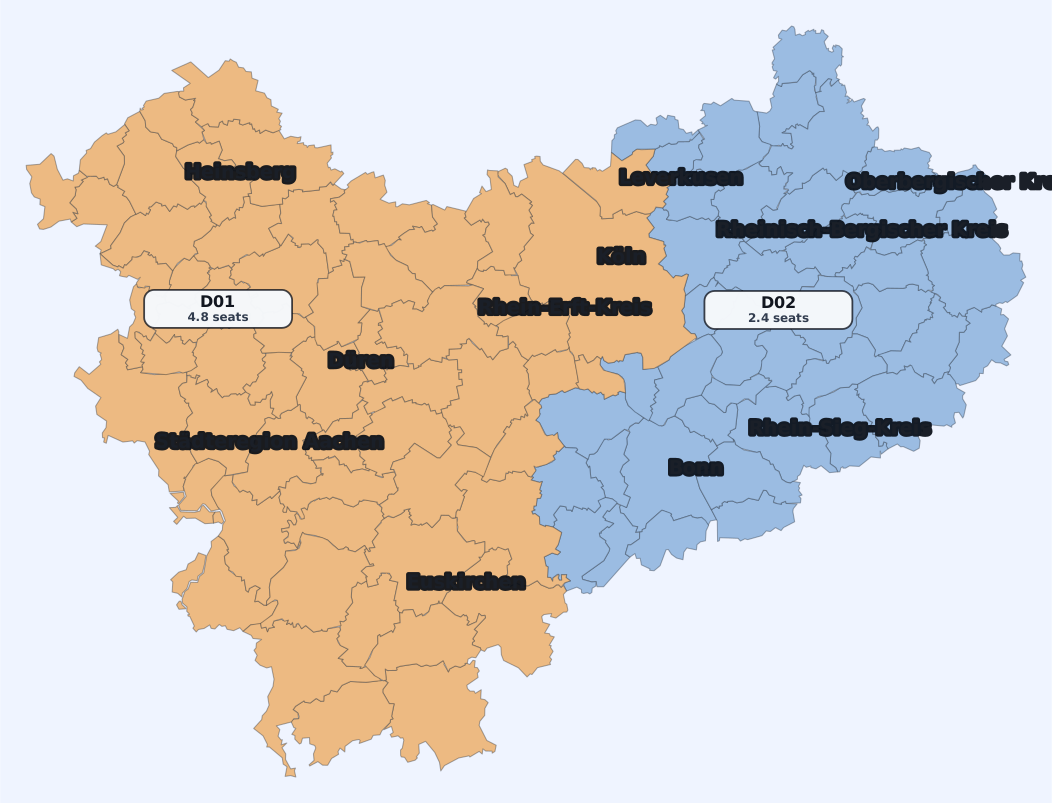
Köln region
The Köln region required closer local review because the ordinary regional boundaries were too populous to remain a single district within the preferred seat range. The final split produces two contiguous districts within that range: one centered on Köln and its western adjacent units, the other on Bonn and the touching Bergisches-Rhein-Sieg units.
- Köln + Leverkusen + Städteregion Aachen + Düren + Rhein-Erft-Kreis + Euskirchen + Heinsberg (about 4.77 seats by population)
- Bonn + Oberbergischer Kreis + Rheinisch-Bergischer Kreis + Rhein-Sieg-Kreis (about 2.37 seats by population)
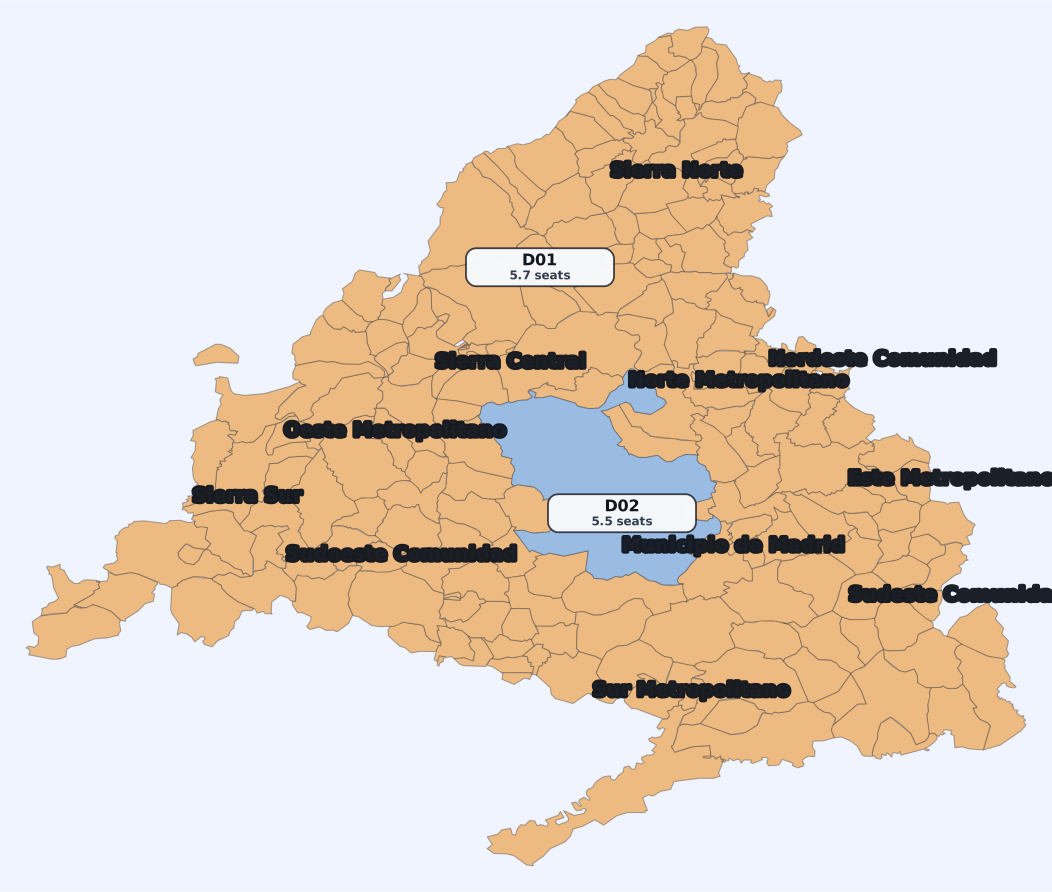
Madrid
Madrid was treated as a large metropolitan case. The final model keeps the municipality of Madrid whole and assigns the rest of the region to a second district.
- Municipio de Madrid (about 5.53 seats by population)
- Rest of Comunidad de Madrid (about 5.72 seats by population)
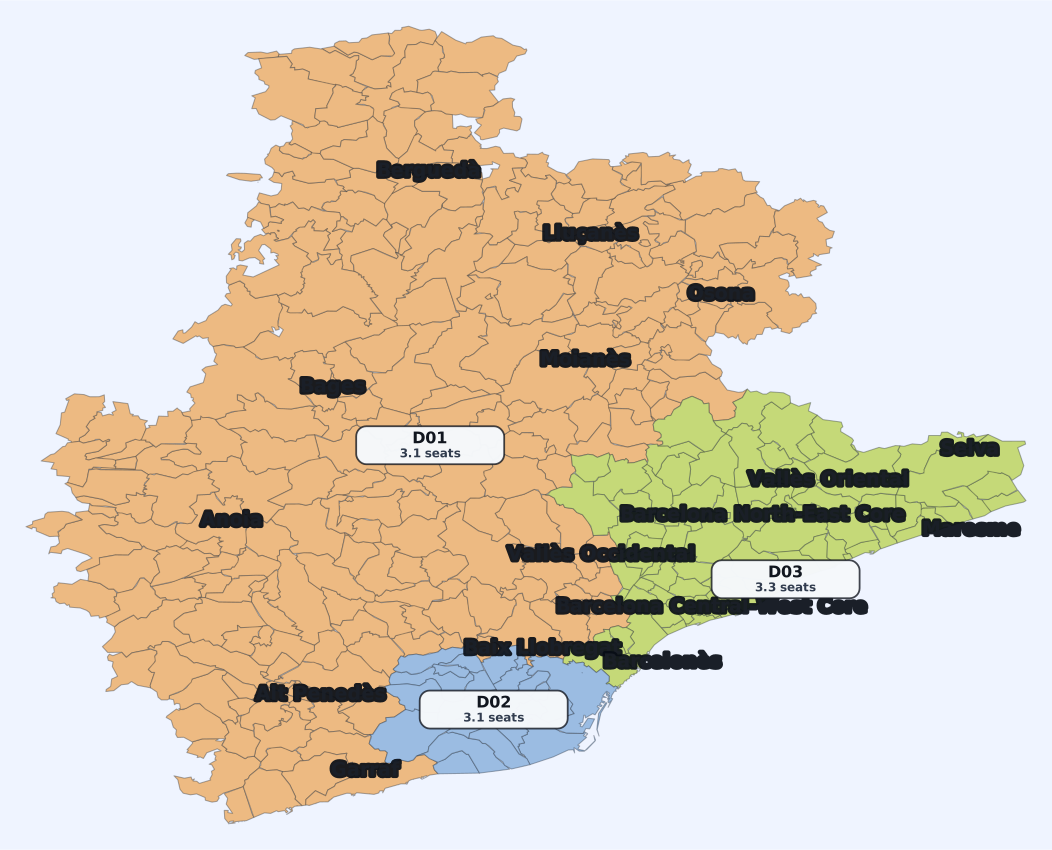
Barcelona
Barcelona was reviewed using actual city-district and municipal geometry so that the final three districts would remain contiguous and population-balanced without relying on improvised shapes.
- Barcelona Inland and Outer Arc (about 3.05 seats by population)
- Barcelona Lower Llobregat Metro (about 3.10 seats by population)
- Barcelona Besòs and North-East Arc (about 3.27 seats by population)
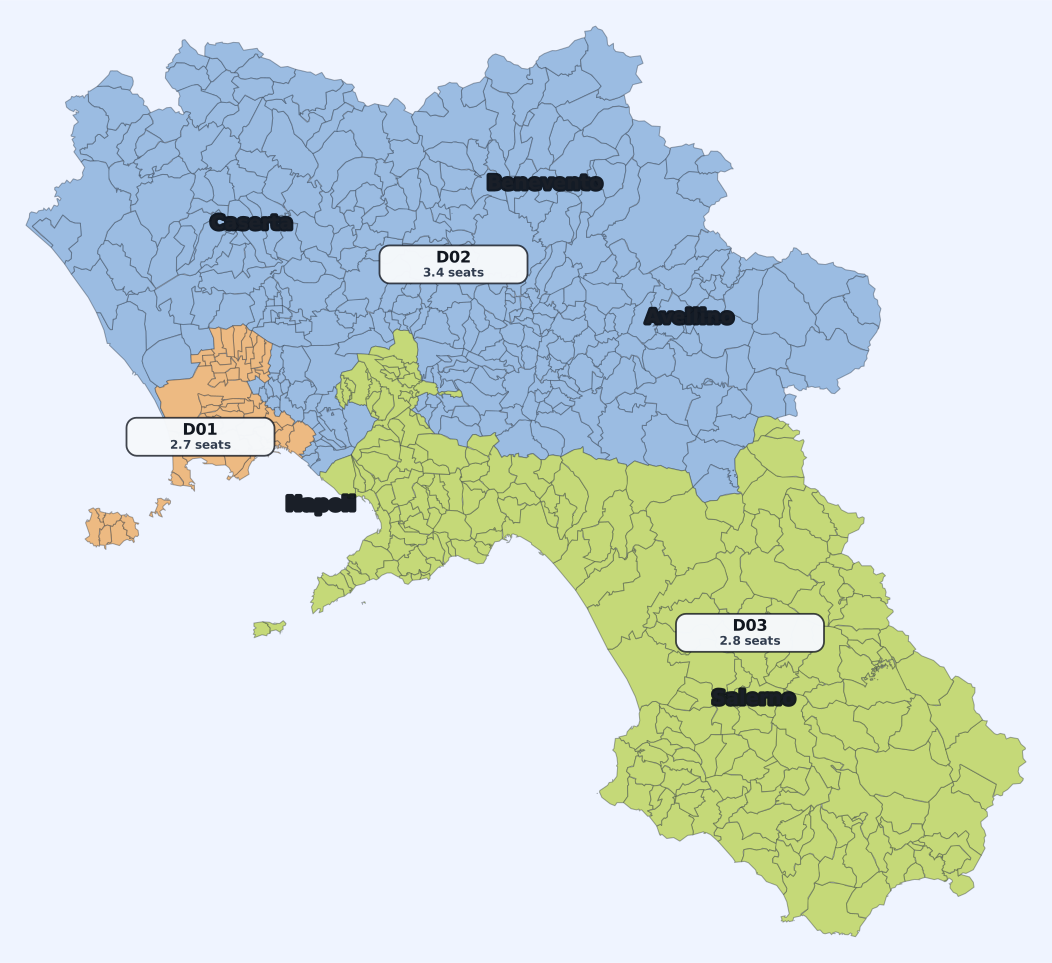
Campania
Campania was reviewed with Naples handled below the municipal level so that Naples and its immediately contiguous suburbs could remain in a single district.
- Naples Metropolitan Core and Phlegraean West (about 2.70 seats by population)
- North-East and Inland Campania (about 3.37 seats by population)
- Vesuvian South and Salerno Axis (about 2.85 seats by population)
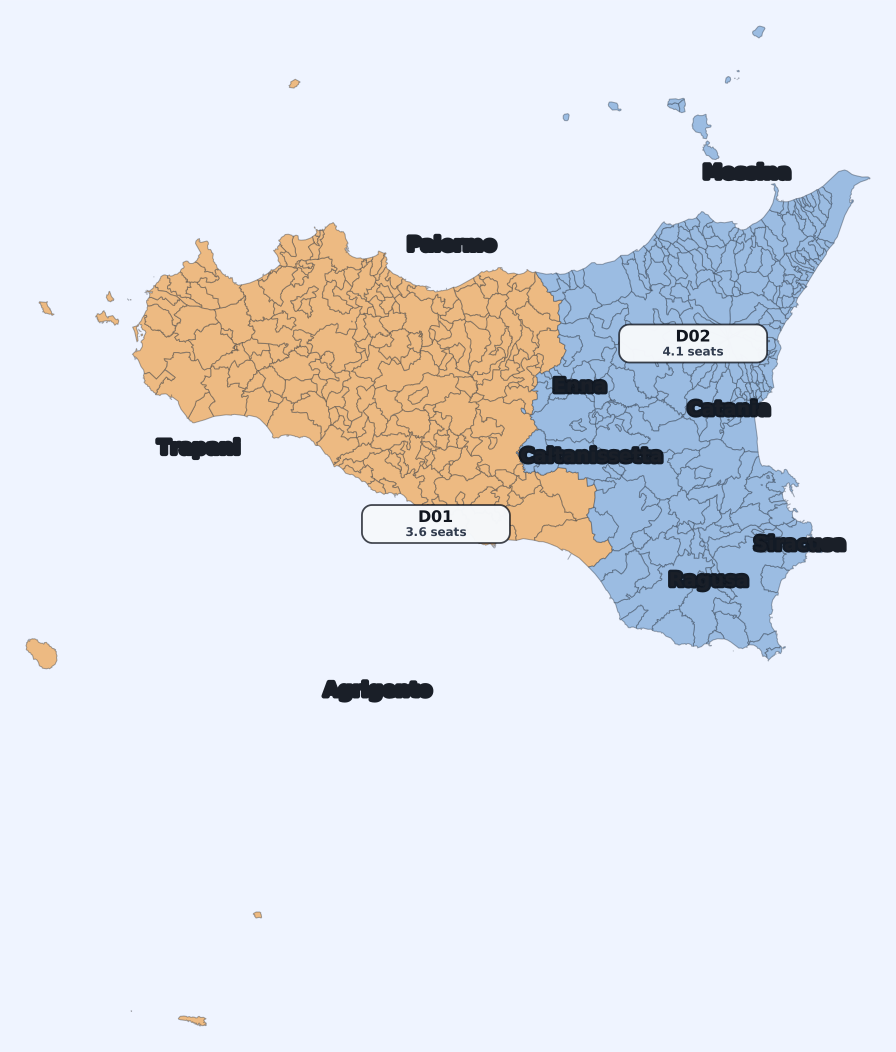
Sicily
Sicily was treated as a large island case and resolved into two contiguous groupings, western and eastern, both within the preferred seat range.
- Western Sicily (about 3.58 seats by population)
- Eastern Sicily and the Ionian-South-East (about 4.07 seats by population)
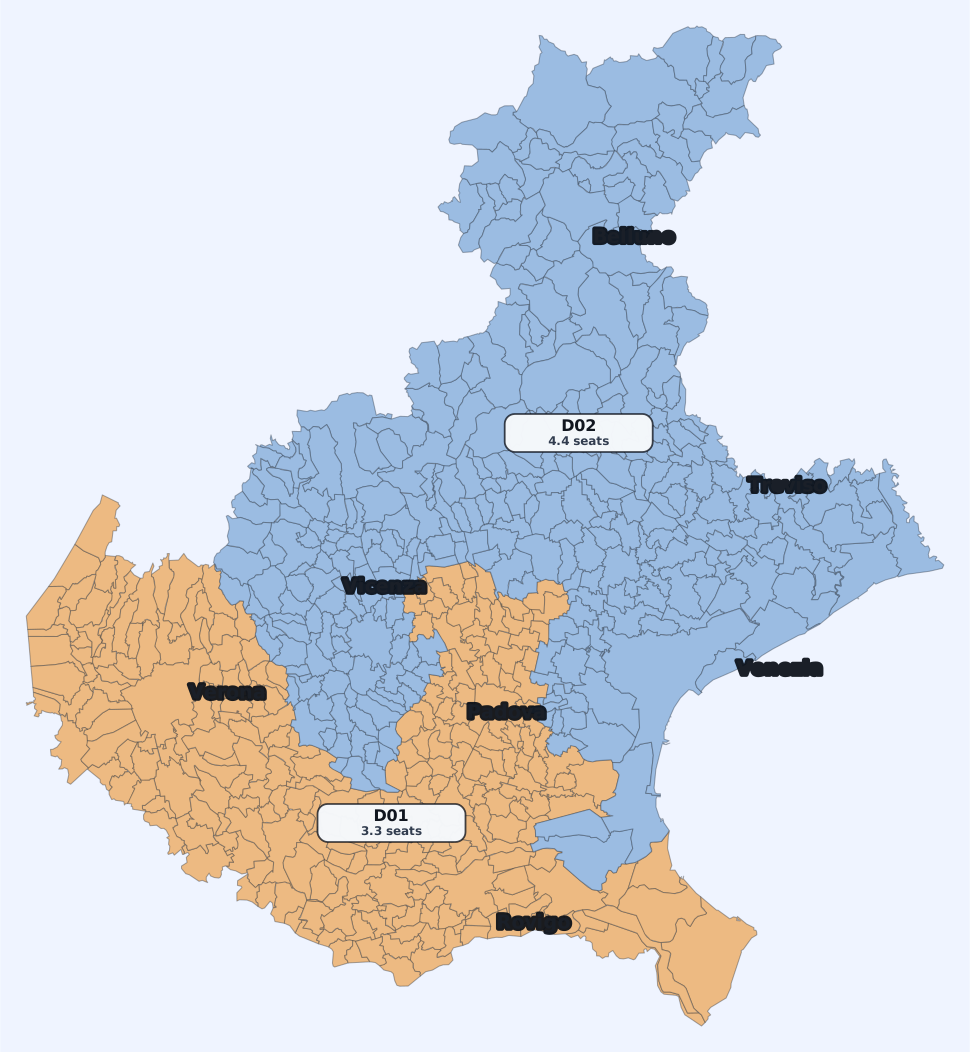
Veneto
Veneto required closer local review because the ordinary regional unit was too populous to remain a single district within the preferred seat range. The final result is a contiguous two-district split within that range.
- Verona + Padova + Rovigo (about 3.33 seats by population)
- Vicenza + Belluno + Treviso + Venezia (about 4.41 seats by population)
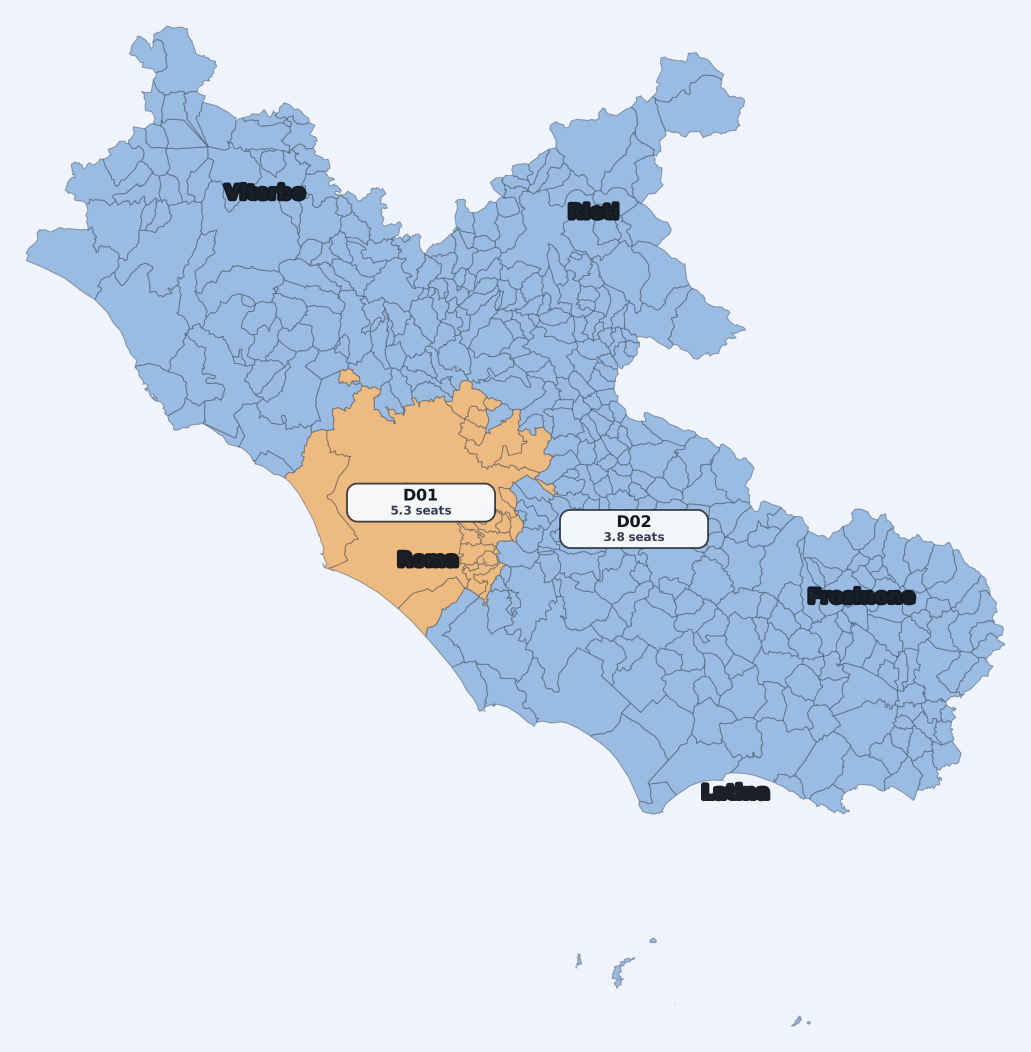
Lazio
Lazio required closer local review because the ordinary regional unit was too populous to remain a single district within the preferred seat range. The final split keeps Roma Comune with its immediately contiguous commuter belt and assigns the remaining contiguous territory to a second district.
- Roma Comune and Primary Metro Belt (about 5.35 seats by population)
- Rest of Lazio (about 3.76 seats by population)
The Final Lower-Chamber Map
The finished reference map for the lower chamber contains 170 districts and 720 seats across the 27 member states. It shows that the proposed apportionment, electoral, and districting rules can generate a Union-wide lower-chamber map without sacrificing territorial coherence. Most districts are resolved through the ordinary lower-chamber districting sequence, most fall within the preferred STV range, and only a small number require closer local review or named exceptions.
For keyboard and screen-reader use, use the district table in the District Appendix to select and compare districts. The map remains available as a visual overview and pointer-based exploration layer.
Canarias
Açores + Madeira
French Outermost Regions (Guadeloupe, Martinique, French Guiana, Réunion, and Mayotte)
Member states
27
All 27 member states are represented in the proposal.
Representatives
720
Seats in the Chamber of Representatives.
Preferred districts
141
Districts in the preferred three- to six-seat STV range.
Districts
170
Districts used to elect the Chamber of Representatives.
How districts were resolved
152 districts were resolved through the ordinary regional hierarchy.
16 districts came from below-NUTS3 local review.
Two districts are explicit named attachment or autonomy exceptions.
District size
141 districts fall in the preferred three- to six-seat range.
Four one-seat districts remain as narrow fallback cases where a multi-member STV district is not possible.
The most common district sizes are five seats, four seats, and three seats.
Conclusion
This paper sets out a federal redesign of the Union’s legislative order that gives popular representation and state representation distinct institutional forms. A Chamber of Representatives more closely tied to population equality, together with a Senate representing the member states as equal constituent polities, should replace a system that now mixes those representative principles without giving either a clean institutional form. It should also remove state representation from national ministers acting inside the legislature and place it in a distinctly legislative chamber.
The reform should also put the two chambers on equal legislative footing. Both should take part in ordinary lawmaking on equal terms, and both should have the power to introduce legislation. That should address a central democratic weakness of the present Union order: the European Parliament is directly elected but lacks a general right of legislative initiative. The proposal therefore strengthens democratic responsibility without treating the Union as a unitary polity abstracted from its member states.
A lower chamber elected mostly in three- to six-seat districts under STV would likely encourage moderate pluralism rather than high fragmentation, while keeping electoral geography tied to member-state borders and recognised territorial units. That is the kind of federal legislature defended here: a more population-based popular chamber within a federal order that still recognises the member states as constituent polities.
This article does not attempt a complete constitution for the Union. It identifies the institutional core of a federal legislative settlement: a bicameral Parliament of the European Union, a Senate replacing the Council in the legislative order, co-equal chambers with shared initiative rights, and the essential electoral and districting principles of the lower chamber, which can be fixed at treaty level. The reference map shows that those principles can be implemented in a coherent lower-chamber geography. Much of the detailed electoral and districting machinery can then be left to later legislation within the revised order. Questions of executive coordination beyond the legislature, treaty adoption and ratification, the longer-term development of party organization, and full implementation remain for a later stage.
District Appendix
This appendix provides information about each lower-house electoral district, its NUTS-basis, number of seats, population, and people per seat data. To avoid confusion, the appendix shifts from country-level chamber RQ to a district parity quotient, or DPQ, which measures population parity across districts within the lower-chamber model.
Table 7. District Appendix: Lower-Chamber Districts and Parity Data
This district table is the primary keyboard-accessible control for selecting and comparing districts.
No districts match the current filters. Clear the filters or widen the search.
| Country | District | Basis | Seats | Population | People / seat | DPQ | Explanation |
|---|---|---|---|---|---|---|---|
| Austria (AT) |
AT1
|
NUTS1district | 7 | 4.031m | 575,919 | 1.060 | |
| Austria (AT) |
AT2
|
NUTS1district | 3 | 1.840m | 613,182 | 0.996 | |
| Austria (AT) |
AT3
|
NUTS1district | 5 | 3.288m | 657,554 | 0.929 | |
| Belgium (BE) |
Région de Bruxelles-Capitale/Brussels Hoofdstedelijk Gewest
BE1
|
NUTS1district | 2 | 1.264m | 632,186 | 0.984 | |
| Belgium (BE) |
Prov. Antwerpen + Prov. Limburg (BE)
BE2-M01
|
NUTS2 district | 5 | 2.837m | 567,437 | 1.096 | |
| Belgium (BE) |
Prov. Oost-Vlaanderen + Prov. Vlaams-Brabant + Prov. West-Vlaanderen
BE2-M02
|
NUTS2 district | 6 | 4.002m | 666,947 | 0.933 | |
| Belgium (BE) |
BE3
|
NUTS1district | 6 | 3.714m | 618,976 | 1.005 | |
| Bulgaria (BG) |
BG3
|
NUTS1district | 5 | 3.122m | 624,337 | 1.032 | |
| Bulgaria (BG) |
BG4
|
NUTS1district | 5 | 3.324m | 664,759 | 0.970 | |
| Cyprus (CY) |
CY0
|
NUTS1district | 2 | 966,365 | 483,183 | 1.000 | |
| Czechia (CZ) |
Praha + Střední Čechy
CZ0-M01
|
NUTS2 district | 4 | 2.841m | 710,168 | 0.903 | |
| Czechia (CZ) |
Jihozápad + Jihovýchod
CZ0-M02
|
NUTS2 district | 5 | 3.013m | 602,518 | 1.064 | |
| Czechia (CZ) |
Severozápad + Severovýchod
CZ0-M03
|
NUTS2 district | 4 | 2.644m | 661,121 | 0.970 | |
| Czechia (CZ) |
Střední Morava + Moravskoslezsko
CZ0-M04
|
NUTS2 district | 4 | 2.403m | 600,703 | 1.067 | |
| Germany (DE) |
DE11
|
NUTS2 district | 7 | 4.165m | 594,957 | 1.055 | |
| Germany (DE) |
DE12
|
NUTS2 district | 5 | 2.844m | 568,881 | 1.103 | |
| Germany (DE) |
DE13
|
NUTS2 district | 4 | 2.321m | 580,193 | 1.082 | |
| Germany (DE) |
DE14
|
NUTS2 district | 3 | 1.901m | 633,621 | 0.990 | |
| Germany (DE) |
Ingolstadt, Kreisfreie Stadt + München, Kreisfreie Stadt + Dachau + Eichstätt + Freising + Fürstenfeldbruck + Garmisch-Partenkirchen + Landsberg am Lech + Neuburg-Schrobenhausen + Pfaffenhofen a. d. Ilm + Weilheim-Schongau
DE21-M01
|
NUTS3 district | 5 | 2.893m | 578,530 | 1.085 | |
| Germany (DE) |
Rosenheim, Kreisfreie Stadt + Altötting + Berchtesgadener Land + Bad Tölz-Wolfratshausen + Ebersberg + Erding + Miesbach + Mühldorf a. Inn + München, Landkreis + Rosenheim, Landkreis + Starnberg + Traunstein
DE21-M02
|
NUTS3 district | 3 | 1.833m | 611,150 | 1.027 | |
| Germany (DE) |
Niederbayern + Oberpfalz
DE2-M01
|
NUTS2 district | 4 | 2.368m | 591,940 | 1.060 | |
| Germany (DE) |
Oberfranken + Mittelfranken
DE2-M02
|
NUTS2 district | 5 | 2.847m | 569,380 | 1.102 | |
| Germany (DE) |
DE26
|
NUTS2 district | 2 | 1.315m | 657,578 | 0.954 | |
| Germany (DE) |
DE27
|
NUTS2 district | 3 | 1.921m | 640,171 | 0.980 | |
| Germany (DE) |
DE3
|
NUTS1district | 6 | 3.662m | 610,397 | 1.028 | |
| Germany (DE) |
DE4
|
NUTS1district | 4 | 2.554m | 638,616 | 0.983 | |
| Germany (DE) |
DE6
|
NUTS1district | 3 | 1.852m | 617,199 | 1.017 | |
| Germany (DE) |
DE71
|
NUTS2 district | 6 | 4.024m | 670,672 | 0.936 | |
| Germany (DE) |
Gießen + Kassel
DE7-M01
|
NUTS2 district | 4 | 2.244m | 560,879 | 1.119 | |
| Germany (DE) |
DE8
|
NUTS1district | 3 | 1.578m | 526,014 | 1.193 | |
| Germany (DE) |
Braunschweig + Lüneburg
DE9-M01
|
NUTS2 district | 5 | 3.315m | 662,936 | 0.947 | |
| Germany (DE) |
DE92
|
NUTS2 district | 3 | 2.123m | 707,800 | 0.887 | |
| Germany (DE) |
Weser-Ems + Bremen
DE94-A01
|
NUTS2 district with attached territory | 5 | 3.273m | 654,541 | 0.959 | Bremen is attached to this north-western Lower Saxony district because it is the contiguous neighboring mainland host district within the same regional shell. |
| Germany (DE) |
Düsseldorf, Kreisfreie Stadt + Essen, Kreisfreie Stadt + Mülheim an der Ruhr, Kreisfreie Stadt + Oberhausen, Kreisfreie Stadt + Remscheid, Kreisfreie Stadt + Solingen, Kreisfreie Stadt + Wuppertal, Kreisfreie Stadt + Mettmann
DEA1-M01
|
NUTS3 district | 4 | 2.705m | 676,322 | 0.928 | |
| Germany (DE) |
Duisburg, Kreisfreie Stadt + Krefeld, Kreisfreie Stadt + Mönchengladbach, Kreisfreie Stadt + Kleve + Rhein-Kreis Neuss + Viersen + Wesel
DEA1-M02
|
NUTS3 district | 4 | 2.534m | 633,405 | 0.991 | |
| Germany (DE) |
Köln + Leverkusen + Städteregion Aachen + Düren + Rhein-Erft-Kreis + Euskirchen + Heinsberg
DEA2-D01
|
Local refinement | 5 | 2.999m | 599,835 | 1.046 | The Köln region is divided into a western district and an eastern Bonn-Bergisches-Rhein-Sieg district to preserve a coherent metropolitan split within the same regional shell. |
| Germany (DE) |
Bonn + Oberbergischer Kreis + Rheinisch-Bergischer Kreis + Rhein-Sieg-Kreis
DEA2-D02
|
Local refinement | 2 | 1.487m | 743,554 | 0.844 | The Köln region is divided into a western district and an eastern Bonn-Bergisches-Rhein-Sieg district to preserve a coherent metropolitan split within the same regional shell. |
| Germany (DE) |
DEA3
|
NUTS2 district | 4 | 2.654m | 663,596 | 0.946 | |
| Germany (DE) |
DEA4
|
NUTS2 district | 3 | 2.073m | 690,991 | 0.908 | |
| Germany (DE) |
DEA5
|
NUTS2 district | 6 | 3.573m | 595,523 | 1.054 | |
| Germany (DE) |
Koblenz + Trier + Saarland
DEB-M01-A01
|
NUTS2 district with attached territory | 5 | 3.068m | 613,663 | 1.023 | Saarland is attached to this western Rheinland-Pfalz district because it is the contiguous host attachment that best preserves the territorial hierarchy. |
| Germany (DE) |
DEB3
|
NUTS2 district | 3 | 2.071m | 690,299 | 0.909 | |
| Germany (DE) |
DED
|
NUTS1district | 6 | 4.055m | 675,782 | 0.929 | |
| Germany (DE) |
DEE
|
NUTS1district | 3 | 2.145m | 714,857 | 0.878 | |
| Germany (DE) |
DEF
|
NUTS1district | 5 | 2.953m | 590,640 | 1.062 | |
| Germany (DE) |
DEG
|
NUTS1district | 3 | 2.115m | 704,957 | 0.890 | |
| Denmark (DK) |
Hovedstaden + Sjælland
DK0-M01
|
NUTS2 district | 5 | 2.764m | 552,804 | 1.078 | |
| Denmark (DK) |
Syddanmark + Midtjylland + Nordjylland
DK0-M02
|
NUTS2 district | 5 | 3.197m | 639,446 | 0.932 | |
| Estonia (EE) |
EE0
|
NUTS1district | 2 | 1.375m | 687,344 | 1.000 | |
| Greece (EL) |
EL3
|
NUTS1district | 6 | 3.773m | 628,779 | 0.971 | |
| Greece (EL) |
EL4
|
NUTS1district | 2 | 1.148m | 573,933 | 1.063 | The Aegean islands and Crete remain together as an island district rather than being attached to mainland Greece. |
| Greece (EL) |
EL5
|
NUTS1district | 5 | 2.903m | 580,597 | 1.051 | |
| Greece (EL) |
EL6
|
NUTS1district | 4 | 2.552m | 638,060 | 0.957 | |
| Spain (ES) |
ES1
|
NUTS1district | 7 | 4.306m | 615,183 | 1.013 | |
| Spain (ES) |
País Vasco + Comunidad Foral de Navarra + La Rioja
ES2-M01
|
NUTS2 district | 5 | 3.230m | 646,040 | 0.965 | |
| Spain (ES) |
ES24
|
NUTS2 district | 2 | 1.352m | 675,796 | 0.922 | |
| Spain (ES) |
Acebeda (La) + Ajalvir + Alameda del Valle + Alamo (El) + Alcalá de Henares + Alcobendas + Alcorcón + Aldea del Fresno + Algete + Alpedrete + Ambite + Anchuelo + Aranjuez + Arganda del Rey + Arroyomolinos + Atazar (El) + Batres + Becerril de la Sierra + Belmonte de Tajo + Berzosa del Lozoya + Berrueco (El) + Boadilla del Monte + Boalo (El) + Braojos + Brea de Tajo + Brunete + Buitrago del Lozoya + Bustarviejo + Cabanillas de la Sierra + Cabrera (La) + Cadalso de los Vidrios + Camarma de Esteruelas + Campo Real + Canencia + Carabaña + Casarrubuelos + Cenicientos + Cercedilla + Cervera de Buitrago + Ciempozuelos + Cobeña + Colmenar del Arroyo + Colmenar de Oreja + Colmenarejo + Colmenar Viejo + Collado Mediano + Collado Villalba + Corpa + Coslada + Cubas de la Sagra + Chapinería + Chinchón + Daganzo de Arriba + Escorial (El) + Estremera + Fresnedillas de la Oliva + Fresno de Torote + Fuenlabrada + Fuente el Saz de Jarama + Fuentidueña de Tajo + Galapagar + Garganta de los Montes + Gargantilla del Lozoya y Pinilla de Buitrago + Gascones + Getafe + Griñón + Guadalix de la Sierra + Guadarrama + Hiruela (La) + Horcajo de la Sierra-Aoslos + Horcajuelo de la Sierra + Hoyo de Manzanares + Humanes de Madrid + Leganés + Loeches + Lozoya + Madarcos + Majadahonda + Manzanares el Real + Meco + Mejorada del Campo + Miraflores de la Sierra + Molar (El) + Molinos (Los) + Montejo de la Sierra + Moraleja de Enmedio + Moralzarzal + Morata de Tajuña + Móstoles + Navacerrada + Navalafuente + Navalagamella + Navalcarnero + Navarredonda y San Mamés + Navas del Rey + Nuevo Baztán + Olmeda de las Fuentes + Orusco de Tajuña + Paracuellos de Jarama + Parla + Patones + Pedrezuela + Pelayos de la Presa + Perales de Tajuña + Pezuela de las Torres + Pinilla del Valle + Pinto + Piñuecar-Gandullas + Pozuelo de Alarcón + Pozuelo del Rey + Prádena del Rincón + Puebla de la Sierra + Quijorna + Rascafría + Redueña + Ribatejada + Rivas-Vaciamadrid + Robledillo de la Jara + Robledo de Chavela + Robregordo + Rozas de Madrid (Las) + Rozas de Puerto Real + San Agustín del Guadalix + San Fernando de Henares + San Lorenzo de El Escorial + San Martín de la Vega + San Martín de Valdeiglesias + San Sebastián de los Reyes + Santa María de la Alameda + Santorcaz + Santos de la Humosa (Los) + Serna del Monte (La) + Serranillos del Valle + Sevilla la Nueva + Somosierra + Soto del Real + Talamanca de Jarama + Tielmes + Titulcia + Torrejón de Ardoz + Torrejón de la Calzada + Torrejón de Velasco + Torrelaguna + Torrelodones + Torremocha de Jarama + Torres de la Alameda + Valdaracete + Valdeavero + Valdelaguna + Valdemanco + Valdemaqueda + Valdemorillo + Valdemoro + Valdeolmos-Alalpardo + Valdepiélagos + Valdetorres de Jarama + Valdilecha + Valverde de Alcalá + Velilla de San Antonio + Vellón (El) + Venturada + Villaconejos + Villa del Prado + Villalbilla + Villamanrique de Tajo + Villamanta + Villamantilla + Villanueva de la Cañada + Villanueva del Pardillo + Villanueva de Perales + Villar del Olmo + Villarejo de Salvanés + Villaviciosa de Odón + Villavieja del Lozoya + Zarzalejo + Lozoyuela-Navas-Sieteiglesias + Puentes Viejas + Tres Cantos
ES300-D01
|
Local refinement | 6 | 3.630m | 605,050 | 1.030 | Madrid is divided into the municipality of Madrid and the rest of the region, keeping the capital whole while avoiding a more artificial internal split. |
| Spain (ES) |
Madrid
ES300-D02
|
Local refinement | 6 | 3.507m | 584,455 | 1.067 | Madrid is divided into the municipality of Madrid and the rest of the region, keeping the capital whole while avoiding a more artificial internal split. |
| Spain (ES) |
ES41
|
NUTS2 district | 4 | 2.392m | 597,921 | 1.042 | |
| Spain (ES) |
Castilla-La Mancha + Extremadura
ES4-M01
|
NUTS2 district | 5 | 3.159m | 631,823 | 0.987 | |
| Spain (ES) |
Abrera + Aguilar de Segarra + Alpens + Argençola + Artés + Avià + Avinyó + Avinyonet del Penedès + Aiguafreda + Bagà + Balenyà + Balsareny + Bellprat + Berga + Borredà + el Bruc + el Brull + les Cabanyes + Cabrera d'Anoia + Calaf + Calders + Calonge de Segarra + Calldetenes + Callús + Canyelles + Capellades + Capolat + Cardona + Carme + Casserres + Castellar del Riu + Castellar del Vallès + Castellar de n'Hug + Castellbell i el Vilar + Castellbisbal + Castellcir + Castell de l'Areny + Castellet i la Gornal + Castellfollit del Boix + Castellfollit de Riubregós + Castellgalí + Castellnou de Bages + Castellolí + Castellterçol + Castellví de la Marca + Castellví de Rosanes + Centelles + Collbató + Collsuspina + Copons + Cubelles + Esparreguera + l'Espunyola + l'Estany + Fígols + Folgueroles + Fonollosa + Font-rubí + Gallifa + Gaià + Gelida + Gironella + Gisclareny + la Granada + Granera + Sant Salvador de Guardiola + Guardiola de Berguedà + Gurb + Igualada + Jorba + la Llacuna + Lluçà + Malla + Manlleu + Manresa + Martorell + les Masies de Roda + les Masies de Voltregà + Masquefa + Matadepera + Mediona + Montcada i Reixac + Monistrol de Montserrat + Monistrol de Calders + Muntanyola + Montclar + Montesquiu + Montmajor + Montmaneu + Moià + Mura + Navarcles + Navàs + la Nou de Berguedà + Òdena + Olvan + Olèrdola + Olesa de Bonesvalls + Olesa de Montserrat + Olivella + Olost + Orís + Oristà + Orpí + Pacs del Penedès + Palau-solità i Plegamans + el Papiol + Perafita + Piera + els Hostalets de Pierola + el Pla del Penedès + la Pobla de Claramunt + la Pobla de Lillet + Polinyà + Pontons + els Prats de Rei + Prats de Lluçanès + Puigdàlber + Puig-reig + Pujalt + la Quar + Rajadell + Rellinars + Ripollet + el Pont de Vilomara i Rocafort + Roda de Ter + Rubí + Rubió + Sabadell + Sagàs + Sant Pere Sallavinera + Saldes + Sallent + Santpedor + Sant Agustí de Lluçanès + Sant Andreu de la Barca + Sant Bartomeu del Grau + Sant Boi de Lluçanès + Sant Cugat del Vallès + Sant Cugat Sesgarrigues + Sant Esteve Sesrovires + Sant Feliu Sasserra + Sant Fruitós de Bages + Sant Hipòlit de Voltregà + Sant Jaume de Frontanyà + Sant Joan de Vilatorrada + Sant Julià de Vilatorta + Sant Llorenç d'Hortons + Sant Llorenç Savall + Sant Martí de Centelles + Sant Martí d'Albars + Sant Martí de Tous + Sant Martí Sarroca + Sant Martí Sesgueioles + Sant Mateu de Bages + Sant Pere de Ribes + Sant Pere de Riudebitlles + Sant Pere de Torelló + Sant Quintí de Mediona + Sant Quirze de Besora + Sant Quirze del Vallès + Sant Quirze Safaja + Sant Sadurní d'Anoia + Sant Sadurní d'Osormort + Marganell + Santa Cecília de Voltregà + Santa Eugènia de Berga + Santa Eulàlia de Riuprimer + Santa Fe del Penedès + Santa Margarida de Montbui + Santa Margarida i els Monjos + Barberà del Vallès + Santa Maria de Besora + l'Esquirol + Santa Maria de Merlès + Santa Maria de Miralles + Santa Maria d'Oló + Santa Perpètua de Mogoda + Sant Vicenç de Castellet + Sant Vicenç de Torelló + Cerdanyola del Vallès + Sentmenat + Cercs + Seva + Sitges + Sobremunt + Sora + Subirats + Súria + Tavèrnoles + Talamanca + Taradell + Terrassa + Tavertet + Tona + Torelló + la Torre de Claramunt + Torrelavit + Torrelles de Foix + Ullastrell + Vacarisses + Vallbona d'Anoia + Vallcebre + Veciana + Vic + Vilada + Viladecavalls + Vilanova del Camí + Vilanova de Sau + Vilobí del Penedès + Vilafranca del Penedès + Vilanova i la Geltrú + Viver i Serrateix + Rupit i Pruit + Sant Julià de Cerdanyola + Badia del Vallès
ES511-D01
|
Local refinement | 3 | 1.936m | 645,493 | 0.966 | Barcelona is divided into three contiguous districts using Barcelona city districts inside the city and municipal boundaries elsewhere in the province. |
| Spain (ES) |
Begues + Castelldefels + Cervelló + Corbera de Llobregat + Cornellà de Llobregat + Esplugues de Llobregat + Gavà + l'Hospitalet de Llobregat + Molins de Rei + Pallejà + el Prat de Llobregat + Sant Boi de Llobregat + Sant Climent de Llobregat + Sant Feliu de Llobregat + Sant Joan Despí + Sant Just Desvern + Santa Coloma de Cervelló + Sant Vicenç dels Horts + Torrelles de Llobregat + Vallirana + Viladecans + la Palma de Cervelló + Barcelona Central-West Core
ES511-D02
|
Local refinement | 3 | 1.970m | 656,531 | 0.949 | Barcelona is divided into three contiguous districts using Barcelona city districts inside the city and municipal boundaries elsewhere in the province. |
| Spain (ES) |
Alella + l'Ametlla del Vallès + Arenys de Mar + Arenys de Munt + Argentona + Badalona + Bigues i Riells del Fai + Cabrera de Mar + Cabrils + Caldes d'Estrac + Caldes de Montbui + Calella + Campins + Canet de Mar + Canovelles + Cànoves i Samalús + Cardedeu + Dosrius + Fogars de Montclús + Fogars de la Selva + les Franqueses del Vallès + la Garriga + Granollers + Gualba + la Llagosta + Llinars del Vallès + Lliçà d'Amunt + Lliçà de Vall + Malgrat de Mar + Martorelles + el Masnou + Mataró + Mollet del Vallès + Montgat + Figaró-Montmany + Montmeló + Montornès del Vallès + Montseny + Òrrius + Palafolls + Parets del Vallès + Pineda de Mar + Premià de Mar + la Roca del Vallès + Sant Iscle de Vallalta + Sant Adrià de Besòs + Sant Andreu de Llavaneres + Sant Antoni de Vilamajor + Sant Celoni + Sant Cebrià de Vallalta + Sant Esteve de Palautordera + Sant Fost de Campsentelles + Sant Feliu de Codines + Vilassar de Dalt + Vilassar de Mar + Premià de Dalt + Sant Pere de Vilamajor + Sant Pol de Mar + Santa Coloma de Gramenet + Santa Eulàlia de Ronçana + Santa Maria de Martorelles + Santa Maria de Palautordera + Santa Susanna + Sant Vicenç de Montalt + Tagamanent + Teià + Tiana + Tordera + Vallgorguina + Vallromanes + Vilalba Sasserra + Vilanova del Vallès + Barcelona North-East Core
ES511-D03
|
Local refinement | 3 | 2.077m | 692,418 | 0.900 | Barcelona is divided into three contiguous districts using Barcelona city districts inside the city and municipal boundaries elsewhere in the province. |
| Spain (ES) |
Girona + Lleida + Tarragona
ES51-M01
|
NUTS3 district | 3 | 2.135m | 711,520 | 0.876 | |
| Spain (ES) |
ES521
|
NUTS3 district | 3 | 1.993m | 664,430 | 0.938 | |
| Spain (ES) |
Castellón/Castelló + Valencia/València
ES52-M01
|
NUTS3 district | 5 | 3.326m | 665,199 | 0.937 | |
| Spain (ES) |
ES53
|
NUTS2 district | 2 | 1.232m | 615,884 | 1.012 | The Balearic Islands remain whole as an island district. |
| Spain (ES) |
Almería + Granada + Jaén + Melilla
ES61-M01-A01
|
NUTS3 district with attached territory | 4 | 2.406m | 601,436 | 1.036 | Melilla is attached to this eastern Andalusian district because its mainland attachment is made to the nearest Andalusian Mediterranean host district. |
| Spain (ES) |
Cádiz + Ceuta
ES612-A01
|
NUTS3 district with attached territory | 2 | 1.342m | 670,955 | 0.929 | Ceuta is attached to this Cadiz-centered district because its mainland attachment is made to the nearest host district across the Strait. |
| Spain (ES) |
Córdoba + Málaga
ES61-M02
|
NUTS3 district | 4 | 2.549m | 637,254 | 0.978 | |
| Spain (ES) |
Huelva + Sevilla
ES61-M03
|
NUTS3 district | 4 | 2.504m | 626,090 | 0.996 | |
| Spain (ES) |
ES62
|
NUTS2 district | 3 | 1.568m | 522,831 | 1.192 | |
| Spain (ES) |
ES7
|
NUTS1district | 4 | 2.239m | 559,689 | 1.114 | |
| Finland (FI) |
Länsi-Suomi + Pohjois- ja Itä-Suomi
FI1-M01
|
NUTS2 district | 4 | 2.665m | 666,285 | 0.935 | |
| Finland (FI) |
Helsinki-Uusimaa + Etelä-Suomi + Åland
FI1-M02-A01
|
NUTS2 district with attached territory | 5 | 2.939m | 587,742 | 1.059 | Åland is attached to this southern mainland Finnish district because it has the clearest maritime connection to south-western Finland. |
| France (FR) |
FR101
|
NUTS3 district | 3 | 2.085m | 694,965 | 0.898 | |
| France (FR) |
Seine-et-Marne + Essonne
FR10-M01
|
NUTS3 district | 5 | 2.827m | 565,438 | 1.104 | |
| France (FR) |
Yvelines + Val-d’Oise
FR10-M02
|
NUTS3 district | 4 | 2.785m | 696,191 | 0.897 | |
| France (FR) |
Hauts-de-Seine + Val-de-Marne
FR10-M03
|
NUTS3 district | 5 | 3.092m | 618,486 | 1.009 | |
| France (FR) |
FR106
|
NUTS3 district | 3 | 1.718m | 572,755 | 1.090 | |
| France (FR) |
FRB
|
NUTS1district | 4 | 2.588m | 647,002 | 0.965 | |
| France (FR) |
FRC
|
NUTS1district | 4 | 2.800m | 700,045 | 0.892 | |
| France (FR) |
FRD
|
NUTS1district | 5 | 3.349m | 669,792 | 0.932 | |
| France (FR) |
FRE1
|
NUTS2 district | 7 | 4.070m | 581,424 | 1.074 | |
| France (FR) |
FRE2
|
NUTS2 district | 3 | 1.914m | 637,957 | 0.979 | |
| France (FR) |
FRF1
|
NUTS2 district | 3 | 1.938m | 646,125 | 0.966 | |
| France (FR) |
Champagne-Ardenne + Lorraine
FRF-M01
|
NUTS2 district | 6 | 3.619m | 603,180 | 1.035 | |
| France (FR) |
FRG
|
NUTS1district | 6 | 3.927m | 654,479 | 0.954 | |
| France (FR) |
FRH
|
NUTS1district | 6 | 3.470m | 578,285 | 1.080 | |
| France (FR) |
FRI1
|
NUTS2 district | 6 | 3.609m | 601,527 | 1.038 | |
| France (FR) |
Limousin + Poitou-Charentes
FRI-M01
|
NUTS2 district | 4 | 2.573m | 643,180 | 0.971 | |
| France (FR) |
FRJ1
|
NUTS2 district | 5 | 2.976m | 595,287 | 1.049 | |
| France (FR) |
FRJ2
|
NUTS2 district | 5 | 3.189m | 637,886 | 0.979 | |
| France (FR) |
FRK1
|
NUTS2 district | 2 | 1.369m | 684,708 | 0.912 | |
| France (FR) |
Ain + Loire + Rhône
FRK2-M01
|
NUTS3 district | 5 | 3.384m | 676,703 | 0.923 | |
| France (FR) |
Ardèche + Drôme + Isère + Savoie + Haute-Savoie
FRK2-M02
|
NUTS3 district | 6 | 3.485m | 580,901 | 1.075 | |
| France (FR) |
Alpes-de-Haute-Provence + Hautes-Alpes + Alpes-Maritimes + Var
FRL0-M01
|
NUTS3 district | 4 | 2.579m | 644,840 | 0.968 | |
| France (FR) |
Bouches-du-Rhône + Vaucluse
FRL0-M02
|
NUTS3 district | 4 | 2.673m | 668,251 | 0.934 | |
| France (FR) |
FRM
|
NUTS1district | 1 | 358,833 | 358,833 | 1.740 | Corsica remains whole rather than being attached to mainland France. |
| France (FR) |
Régions Ultrapériphériques Françaises
FRY
|
NUTS1district | 4 | 2.289m | 572,363 | 1.091 | |
| Croatia (HR) |
HR0
|
NUTS1district | 6 | 3.862m | 643,661 | 1.000 | |
| Hungary (HU) |
HU1
|
NUTS1district | 5 | 3.019m | 603,896 | 1.058 | |
| Hungary (HU) |
HU2
|
NUTS1district | 4 | 2.891m | 722,823 | 0.884 | |
| Hungary (HU) |
HU3
|
NUTS1district | 6 | 3.674m | 612,309 | 1.044 | |
| Ireland (IE) |
Northern and Western + Southern
IE0-M01
|
NUTS2 district | 5 | 2.718m | 543,594 | 1.094 | |
| Ireland (IE) |
Eastern and Midland
IE06
|
NUTS2 district | 4 | 2.634m | 658,428 | 0.903 | |
| Italy (IT) |
Piemonte + Valle d’Aosta/Vallée d’Aoste
ITC-M01
|
NUTS2 district | 7 | 4.375m | 624,929 | 1.004 | |
| Italy (IT) |
ITC3
|
NUTS2 district | 2 | 1.509m | 754,570 | 0.831 | |
| Italy (IT) |
Varese + Bergamo + Monza e della Brianza
ITC4-M01
|
NUTS3 district | 5 | 2.867m | 573,495 | 1.094 | |
| Italy (IT) |
Como + Lecco + Sondrio + Brescia + Cremona + Mantova
ITC4-M02
|
NUTS3 district | 5 | 3.131m | 626,203 | 1.002 | |
| Italy (IT) |
Pavia + Lodi + Milano
ITC4-M03
|
NUTS3 district | 6 | 4.014m | 668,927 | 0.938 | |
| Italy (IT) |
Abruzzo + Molise
ITF-M01
|
NUTS2 district | 2 | 1.559m | 779,398 | 0.805 | |
| Italy (IT) |
Aversa + Carinaro + Casaluce + Cesa + Frignano + Gricignano di Aversa + Lusciano + Parete + San Cipriano d'Aversa + San Marcellino + Sant'Arpino + Succivo + Teverola + Trentola Ducenta + Villa di Briano + Casapesenna + Bacoli + Barano d'Ischia + Calvizzano + Casamicciola Terme + Forio + Giugliano in Campania + Ischia + Lacco Ameno + Marano di Napoli + Melito di Napoli + Monte di Procida + Mugnano di Napoli + Municipalita 1 + Municipalita 2 + Municipalita 3 + Municipalita 4 + Municipalita 5 + Municipalita 6 + Municipalita 7 + Municipalita 8 + Municipalita 9 + Municipalita 10 + Pozzuoli + Procida + Qualiano + Quarto + Serrara Fontana + Villaricca
ITF3-D01
|
Local refinement | 3 | 1.687m | 562,486 | 1.115 | Campania is divided into a Naples-centered district, a north-east and inland district, and a Vesuvian-southern district. |
| Italy (IT) |
Ailano + Alife + Alvignano + Arienzo + Baia e Latina + Bellona + Caianello + Caiazzo + Calvi Risorta + Camigliano + Cancello ed Arnone + Capodrise + Capriati a Volturno + Capua + Carinola + Casagiove + Casal di Principe + Casapulla + Caserta + Castel Campagnano + Castel di Sasso + Castello del Matese + Castel Morrone + Castel Volturno + Cervino + Ciorlano + Conca della Campania + Curti + Dragoni + Fontegreca + Formicola + Francolise + Gallo Matese + Galluccio + Giano Vetusto + Gioia Sannitica + Grazzanise + Letino + Liberi + Macerata Campania + Maddaloni + Marcianise + Marzano Appio + Mignano Monte Lungo + Mondragone + Orta di Atella + Pastorano + Piana di Monte Verna + Piedimonte Matese + Pietramelara + Pietravairano + Pignataro Maggiore + Pontelatone + Portico di Caserta + Prata Sannita + Pratella + Presenzano + Raviscanina + Recale + Riardo + Rocca d'Evandro + Roccamonfina + Roccaromana + Rocchetta e Croce + Ruviano + San Felice a Cancello + San Gregorio Matese + San Nicola la Strada + San Pietro Infine + San Potito Sannitico + San Prisco + Santa Maria a Vico + Santa Maria Capua Vetere + Santa Maria la Fossa + San Tammaro + Sant'Angelo d'Alife + Sessa Aurunca + Sparanise + Teano + Tora e Piccilli + Vairano Patenora + Valle Agricola + Valle di Maddaloni + Villa Literno + Vitulazio + Falciano del Massico + Cellole + San Marco Evangelista + Airola + Amorosi + Apice + Apollosa + Arpaia + Arpaise + Baselice + Benevento + Bonea + Bucciano + Buonalbergo + Calvi + Campolattaro + Campoli del Monte Taburno + Casalduni + Castelfranco in Miscano + Castelpagano + Castelpoto + Castelvenere + Castelvetere in Val Fortore + Cautano + Ceppaloni + Cerreto Sannita + Circello + Colle Sannita + Cusano Mutri + Dugenta + Durazzano + Faicchio + Foglianise + Foiano di Val Fortore + Forchia + Fragneto l'Abate + Fragneto Monforte + Frasso Telesino + Ginestra degli Schiavoni + Guardia Sanframondi + Limatola + Melizzano + Moiano + Molinara + Montefalcone di Val Fortore + Montesarchio + Morcone + Paduli + Pago Veiano + Pannarano + Paolisi + Paupisi + Pesco Sannita + Pietraroja + Pietrelcina + Ponte + Pontelandolfo + Puglianello + Reino + San Bartolomeo in Galdo + San Giorgio del Sannio + San Giorgio La Molara + San Leucio del Sannio + San Lorenzello + San Lorenzo Maggiore + San Lupo + San Marco dei Cavoti + San Martino Sannita + San Nazzaro + San Nicola Manfredi + San Salvatore Telesino + Santa Croce del Sannio + Sant'Agata de' Goti + Sant'Angelo a Cupolo + Sassinoro + Solopaca + Telese Terme + Tocco Caudio + Torrecuso + Vitulano + Sant'Arcangelo Trimonte + Acerra + Afragola + Arzano + Caivano + Cardito + Casalnuovo di Napoli + Casandrino + Casavatore + Casoria + Cercola + Crispano + Frattamaggiore + Frattaminore + Grumo Nevano + Pollena Trocchia + Pomigliano d'Arco + Portici + Ercolano + San Giorgio a Cremano + San Sebastiano al Vesuvio + Sant'Anastasia + Sant'Antimo + Somma Vesuviana + Volla + Massa di Somma + Aiello del Sabato + Altavilla Irpina + Andretta + Aquilonia + Ariano Irpino + Atripalda + Avella + Avellino + Bagnoli Irpino + Baiano + Bisaccia + Bonito + Cairano + Calabritto + Calitri + Candida + Caposele + Capriglia Irpina + Carife + Casalbore + Cassano Irpino + Castel Baronia + Castelfranci + Castelvetere sul Calore + Cervinara + Cesinali + Chianche + Chiusano di San Domenico + Contrada + Conza della Campania + Domicella + Flumeri + Fontanarosa + Forino + Frigento + Gesualdo + Greci + Grottaminarda + Grottolella + Guardia Lombardi + Lacedonia + Lapio + Lauro + Lioni + Luogosano + Manocalzati + Marzano di Nola + Melito Irpino + Mercogliano + Mirabella Eclano + Montaguto + Montecalvo Irpino + Montefalcione + Monteforte Irpino + Montefredane + Montefusco + Montella + Montemarano + Montemiletto + Monteverde + Morra De Sanctis + Moschiano + Mugnano del Cardinale + Nusco + Ospedaletto d'Alpinolo + Pago del Vallo di Lauro + Parolise + Paternopoli + Petruro Irpino + Pietradefusi + Pietrastornina + Prata di Principato Ultra + Pratola Serra + Quadrelle + Quindici + Roccabascerana + Rocca San Felice + Rotondi + Salza Irpina + San Mango sul Calore + San Martino Valle Caudina + San Michele di Serino + San Nicola Baronia + San Potito Ultra + San Sossio Baronia + Santa Lucia di Serino + Sant'Andrea di Conza + Sant'Angelo all'Esca + Sant'Angelo a Scala + Sant'Angelo dei Lombardi + Santa Paolina + Santo Stefano del Sole + Savignano Irpino + Scampitella + Senerchia + Serino + Sirignano + Solofra + Sorbo Serpico + Sperone + Sturno + Summonte + Taurano + Taurasi + Teora + Torella dei Lombardi + Torre Le Nocelle + Torrioni + Trevico + Tufo + Vallata + Vallesaccarda + Venticano + Villamaina + Villanova del Battista + Volturara Irpina + Zungoli + Montoro
ITF3-D02
|
Local refinement | 3 | 2.111m | 703,780 | 0.891 | Campania is divided into a Naples-centered district, a north-east and inland district, and a Vesuvian-southern district. |
| Italy (IT) |
Agerola + Anacapri + Boscoreale + Boscotrecase + Brusciano + Camposano + Capri + Carbonara di Nola + Casamarciano + Casola di Napoli + Castellammare di Stabia + Castello di Cisterna + Cicciano + Cimitile + Comiziano + Gragnano + Lettere + Liveri + Mariglianella + Marigliano + Massa Lubrense + Meta + Nola + Ottaviano + Palma Campania + Piano di Sorrento + Pimonte + Poggiomarino + Pompei + Roccarainola + San Gennaro Vesuviano + San Giuseppe Vesuviano + San Paolo Bel Sito + Sant'Agnello + Sant'Antonio Abate + San Vitaliano + Saviano + Scisciano + Sorrento + Striano + Terzigno + Torre Annunziata + Torre del Greco + Tufino + Vico Equense + Visciano + Santa Maria la Carità + Trecase + Acerno + Agropoli + Albanella + Alfano + Altavilla Silentina + Amalfi + Angri + Aquara + Ascea + Atena Lucana + Atrani + Auletta + Baronissi + Battipaglia + Bellosguardo + Bracigliano + Buccino + Buonabitacolo + Caggiano + Calvanico + Camerota + Campagna + Campora + Cannalonga + Capaccio Paestum + Casalbuono + Casaletto Spartano + Casal Velino + Caselle in Pittari + Castelcivita + Castellabate + Castelnuovo Cilento + Castelnuovo di Conza + Castel San Giorgio + Castel San Lorenzo + Castiglione del Genovesi + Cava de' Tirreni + Celle di Bulgheria + Centola + Ceraso + Cetara + Cicerale + Colliano + Conca dei Marini + Controne + Contursi Terme + Corbara + Corleto Monforte + Cuccaro Vetere + Eboli + Felitto + Fisciano + Furore + Futani + Giffoni Sei Casali + Giffoni Valle Piana + Gioi + Giungano + Ispani + Laureana Cilento + Laurino + Laurito + Laviano + Lustra + Magliano Vetere + Maiori + Mercato San Severino + Minori + Moio della Civitella + Montano Antilia + Montecorice + Montecorvino Pugliano + Montecorvino Rovella + Monteforte Cilento + Monte San Giacomo + Montesano sulla Marcellana + Morigerati + Nocera Inferiore + Nocera Superiore + Novi Velia + Ogliastro Cilento + Olevano sul Tusciano + Oliveto Citra + Omignano + Orria + Ottati + Padula + Pagani + Palomonte + Pellezzano + Perdifumo + Perito + Pertosa + Petina + Piaggine + Pisciotta + Polla + Pollica + Pontecagnano Faiano + Positano + Postiglione + Praiano + Prignano Cilento + Ravello + Ricigliano + Roccadaspide + Roccagloriosa + Roccapiemonte + Rofrano + Romagnano al Monte + Roscigno + Rutino + Sacco + Sala Consilina + Salento + Salerno + Salvitelle + San Cipriano Picentino + San Giovanni a Piro + San Gregorio Magno + San Mango Piemonte + San Marzano sul Sarno + San Mauro Cilento + San Mauro la Bruca + San Pietro al Tanagro + San Rufo + Santa Marina + Sant'Angelo a Fasanella + Sant'Arsenio + Sant'Egidio del Monte Albino + Santomenna + San Valentino Torio + Sanza + Sapri + Sarno + Sassano + Scafati + Scala + Serramezzana + Serre + Sessa Cilento + Siano + Sicignano degli Alburni + Stella Cilento + Stio + Teggiano + Torchiara + Torraca + Torre Orsaia + Tortorella + Tramonti + Trentinara + Valle dell'Angelo + Vallo della Lucania + Valva + Vibonati + Vietri sul Mare + Bellizzi
ITF3-D03
|
Local refinement | 3 | 1.784m | 594,512 | 1.055 | Campania is divided into a Naples-centered district, a north-east and inland district, and a Vesuvian-southern district. |
| Italy (IT) |
ITF4
|
NUTS2 district | 6 | 3.891m | 648,444 | 0.967 | |
| Italy (IT) |
Basilicata + Calabria
ITF-M02
|
NUTS2 district | 4 | 2.372m | 592,950 | 1.058 | |
| Italy (IT) |
Alcamo + Buseto Palizzolo + Calatafimi-Segesta + Campobello di Mazara + Castellammare del Golfo + Castelvetrano + Custonaci + Erice + Favignana + Gibellina + Marsala + Mazara del Vallo + Paceco + Pantelleria + Partanna + Poggioreale + Salaparuta + Salemi + Santa Ninfa + San Vito Lo Capo + Trapani + Valderice + Vita + Petrosino + Misiliscemi + Alia + Alimena + Aliminusa + Altavilla Milicia + Altofonte + Bagheria + Balestrate + Baucina + Belmonte Mezzagno + Bisacquino + Bolognetta + Bompietro + Borgetto + Caccamo + Caltavuturo + Campofelice di Fitalia + Campofelice di Roccella + Campofiorito + Camporeale + Capaci + Carini + Castelbuono + Casteldaccia + Castellana Sicula + Castronovo di Sicilia + Cefalà Diana + Cefalù + Cerda + Chiusa Sclafani + Ciminna + Cinisi + Collesano + Contessa Entellina + Corleone + Ficarazzi + Gangi + Geraci Siculo + Giardinello + Giuliana + Godrano + Gratteri + Isnello + Isola delle Femmine + Lascari + Lercara Friddi + Marineo + Mezzojuso + Misilmeri + Monreale + Montelepre + Montemaggiore Belsito + Palazzo Adriano + Palermo + Partinico + Petralia Soprana + Petralia Sottana + Piana degli Albanesi + Polizzi Generosa + Pollina + Prizzi + Roccamena + Roccapalumba + San Cipirello + San Giuseppe Jato + San Mauro Castelverde + Santa Cristina Gela + Santa Flavia + Sciara + Sclafani Bagni + Termini Imerese + Terrasini + Torretta + Trabia + Trappeto + Ustica + Valledolmo + Ventimiglia di Sicilia + Vicari + Villabate + Villafrati + Scillato + Blufi + Agrigento + Alessandria della Rocca + Aragona + Bivona + Burgio + Calamonaci + Caltabellotta + Camastra + Cammarata + Campobello di Licata + Canicattì + Casteltermini + Castrofilippo + Cattolica Eraclea + Cianciana + Comitini + Favara + Grotte + Joppolo Giancaxio + Lampedusa e Linosa + Licata + Lucca Sicula + Menfi + Montallegro + Montevago + Naro + Palma di Montechiaro + Porto Empedocle + Racalmuto + Raffadali + Ravanusa + Realmonte + Ribera + Sambuca di Sicilia + San Biagio Platani + San Giovanni Gemini + Santa Elisabetta + Santa Margherita di Belice + Sant'Angelo Muxaro + Santo Stefano Quisquina + Sciacca + Siculiana + Villafranca Sicula + Acquaviva Platani + Bompensiere + Butera + Caltanissetta + Campofranco + Delia + Gela + Marianopoli + Mazzarino + Milena + Montedoro + Mussomeli + Resuttano + Riesi + San Cataldo + Santa Caterina Villarmosa + Serradifalco + Sommatino + Sutera + Vallelunga Pratameno + Villalba
ITG1-D01
|
Local refinement | 4 | 2.239m | 559,796 | 1.121 | Sicily is divided into two contiguous districts, western and eastern, both within the preferred range. |
| Italy (IT) |
Alcara li Fusi + Alì + Alì Terme + Antillo + Barcellona Pozzo di Gotto + Basicò + Brolo + Capizzi + Capo d'Orlando + Capri Leone + Caronia + Casalvecchio Siculo + Castel di Lucio + Castell'Umberto + Castelmola + Castroreale + Cesarò + Condrò + Falcone + Ficarra + Fiumedinisi + Floresta + Fondachelli-Fantina + Forza d'Agrò + Francavilla di Sicilia + Frazzanò + Furci Siculo + Furnari + Gaggi + Galati Mamertino + Gallodoro + Giardini-Naxos + Gioiosa Marea + Graniti + Gualtieri Sicaminò + Itala + Leni + Letojanni + Librizzi + Limina + Lipari + Longi + Malfa + Malvagna + Mandanici + Mazzarrà Sant'Andrea + Merì + Messina + Milazzo + Militello Rosmarino + Mirto + Mistretta + Moio Alcantara + Monforte San Giorgio + Mongiuffi Melia + Montagnareale + Montalbano Elicona + Motta Camastra + Motta d'Affermo + Naso + Nizza di Sicilia + Novara di Sicilia + Oliveri + Pace del Mela + Pagliara + Patti + Pettineo + Piraino + Raccuja + Reitano + Roccafiorita + Roccalumera + Roccavaldina + Roccella Valdemone + Rodì Milici + Rometta + San Filippo del Mela + San Fratello + San Marco d'Alunzio + San Pier Niceto + San Piero Patti + San Salvatore di Fitalia + Santa Domenica Vittoria + Sant'Agata di Militello + Sant'Alessio Siculo + Santa Lucia del Mela + Santa Marina Salina + Sant'Angelo di Brolo + Santa Teresa di Riva + San Teodoro + Santo Stefano di Camastra + Saponara + Savoca + Scaletta Zanclea + Sinagra + Spadafora + Taormina + Torregrotta + Tortorici + Tripi + Tusa + Ucria + Valdina + Venetico + Villafranca Tirrena + Terme Vigliatore + Acquedolci + Torrenova + Niscemi + Agira + Aidone + Assoro + Barrafranca + Calascibetta + Catenanuova + Centuripe + Cerami + Enna + Gagliano Castelferrato + Leonforte + Nicosia + Nissoria + Piazza Armerina + Pietraperzia + Regalbuto + Sperlinga + Troina + Valguarnera Caropepe + Villarosa + Aci Bonaccorsi + Aci Castello + Aci Catena + Acireale + Aci Sant'Antonio + Adrano + Belpasso + Biancavilla + Bronte + Calatabiano + Caltagirone + Camporotondo Etneo + Castel di Iudica + Castiglione di Sicilia + Catania + Fiumefreddo di Sicilia + Giarre + Grammichele + Gravina di Catania + Licodia Eubea + Linguaglossa + Maletto + Mascali + Mascalucia + Militello in Val di Catania + Milo + Mineo + Mirabella Imbaccari + Misterbianco + Motta Sant'Anastasia + Nicolosi + Palagonia + Paternò + Pedara + Piedimonte Etneo + Raddusa + Ramacca + Randazzo + Riposto + San Cono + San Giovanni la Punta + San Gregorio di Catania + San Michele di Ganzaria + San Pietro Clarenza + Sant'Agata li Battiati + Sant'Alfio + Santa Maria di Licodia + Santa Venerina + Scordia + Trecastagni + Tremestieri Etneo + Valverde + Viagrande + Vizzini + Zafferana Etnea + Mazzarrone + Maniace + Ragalna + Acate + Chiaramonte Gulfi + Comiso + Giarratana + Ispica + Modica + Monterosso Almo + Pozzallo + Ragusa + Santa Croce Camerina + Scicli + Vittoria + Augusta + Avola + Buccheri + Buscemi + Canicattini Bagni + Carlentini + Cassaro + Ferla + Floridia + Francofonte + Lentini + Melilli + Noto + Pachino + Palazzolo Acreide + Rosolini + Siracusa + Solarino + Sortino + Portopalo di Capo Passero + Priolo Gargallo
ITG1-D02
|
Local refinement | 4 | 2.548m | 637,052 | 0.985 | Sicily is divided into two contiguous districts, western and eastern, both within the preferred range. |
| Italy (IT) |
ITG2
|
NUTS2 district | 3 | 1.570m | 523,484 | 1.198 | |
| Italy (IT) |
Provincia Autonoma di Bolzano/Bozen + Provincia Autonoma di Trento
ITH1+ITH2
|
Named exception | 2 | 1.083m | 541,351 | 1.159 | The two autonomous provinces remain together as one Alpine district because they form a single constitutional and territorial unit. |
| Italy (IT) |
Verona + Padova + Rovigo
ITH3-D01
|
Local refinement | 3 | 2.088m | 696,013 | 0.901 | Veneto is divided into a Verona-Padova-Rovigo district and a Vicenza-Belluno-Treviso-Venezia district. |
| Italy (IT) |
Vicenza + Belluno + Treviso + Venezia
ITH3-D02
|
Local refinement | 4 | 2.765m | 691,358 | 0.907 | Veneto is divided into a Verona-Padova-Rovigo district and a Vicenza-Belluno-Treviso-Venezia district. |
| Italy (IT) |
ITH4
|
Named exception | 2 | 1.195m | 597,308 | 1.050 | Friuli-Venezia Giulia remains whole because it is an autonomous border region and sits close to the ordinary district-size threshold. |
| Italy (IT) |
Piacenza + Parma + Reggio nell’Emilia
ITH5-M01
|
NUTS3 district | 2 | 1.268m | 634,208 | 0.989 | |
| Italy (IT) |
Modena + Bologna + Ferrara + Ravenna + Forlì-Cesena + Rimini
ITH5-M02
|
NUTS3 district | 5 | 3.184m | 636,705 | 0.985 | |
| Italy (IT) |
ITI1
|
NUTS2 district | 6 | 3.661m | 610,088 | 1.028 | |
| Italy (IT) |
Umbria + Marche
ITI-M01
|
NUTS2 district | 4 | 2.336m | 583,954 | 1.074 | |
| Italy (IT) |
Albano Laziale + Ariccia + Castel Gandolfo + Frascati + Grottaferrata + Guidonia Montecelio + Marino + Mentana + Monte Compatri + Monte Porzio Catone + Monterotondo + Pomezia + Roma + Tivoli + Ciampino + Fiumicino + Fonte Nuova
ITI4-D01
|
Local refinement | 5 | 3.350m | 670,020 | 0.936 | Lazio is divided into Rome with its immediately contiguous commuter belt and the rest of the region. |
| Italy (IT) |
Acquapendente + Arlena di Castro + Bagnoregio + Barbarano Romano + Bassano Romano + Bassano in Teverina + Blera + Bolsena + Bomarzo + Calcata + Canepina + Canino + Capodimonte + Capranica + Caprarola + Carbognano + Castel Sant'Elia + Castiglione in Teverina + Celleno + Cellere + Civita Castellana + Civitella d'Agliano + Corchiano + Fabrica di Roma + Faleria + Farnese + Gallese + Gradoli + Graffignano + Grotte di Castro + Ischia di Castro + Latera + Lubriano + Marta + Montalto di Castro + Montefiascone + Monte Romano + Monterosi + Nepi + Onano + Oriolo Romano + Orte + Piansano + Proceno + Ronciglione + Villa San Giovanni in Tuscia + San Lorenzo Nuovo + Soriano nel Cimino + Sutri + Tarquinia + Tessennano + Tuscania + Valentano + Vallerano + Vasanello + Vejano + Vetralla + Vignanello + Viterbo + Vitorchiano + Accumoli + Amatrice + Antrodoco + Ascrea + Belmonte in Sabina + Borbona + Borgorose + Borgo Velino + Cantalice + Cantalupo in Sabina + Casaprota + Casperia + Castel di Tora + Castelnuovo di Farfa + Castel Sant'Angelo + Cittaducale + Cittareale + Collalto Sabino + Colle di Tora + Collegiove + Collevecchio + Colli sul Velino + Concerviano + Configni + Contigliano + Cottanello + Fara in Sabina + Fiamignano + Forano + Frasso Sabino + Greccio + Labro + Leonessa + Longone Sabino + Magliano Sabina + Marcetelli + Micigliano + Mompeo + Montasola + Montebuono + Monteleone Sabino + Montenero Sabino + Monte San Giovanni in Sabina + Montopoli di Sabina + Morro Reatino + Nespolo + Orvinio + Paganico Sabino + Pescorocchiano + Petrella Salto + Poggio Bustone + Poggio Catino + Poggio Mirteto + Poggio Moiano + Poggio Nativo + Poggio San Lorenzo + Posta + Pozzaglia Sabina + Rieti + Rivodutri + Roccantica + Rocca Sinibalda + Salisano + Scandriglia + Selci + Stimigliano + Tarano + Toffia + Torricella in Sabina + Torri in Sabina + Turania + Vacone + Varco Sabino + Affile + Agosta + Allumiere + Anguillara Sabazia + Anticoli Corrado + Anzio + Arcinazzo Romano + Arsoli + Artena + Bellegra + Bracciano + Camerata Nuova + Campagnano di Roma + Canale Monterano + Canterano + Capena + Capranica Prenestina + Carpineto Romano + Casape + Castel Madama + Castelnuovo di Porto + Castel San Pietro Romano + Cave + Cerreto Laziale + Cervara di Roma + Cerveteri + Ciciliano + Cineto Romano + Civitavecchia + Civitella San Paolo + Colleferro + Colonna + Fiano Romano + Filacciano + Formello + Gallicano nel Lazio + Gavignano + Genazzano + Genzano di Roma + Gerano + Gorga + Jenne + Labico + Lanuvio + Licenza + Magliano Romano + Mandela + Manziana + Marano Equo + Marcellina + Mazzano Romano + Monteflavio + Montelanico + Montelibretti + Montorio Romano + Moricone + Morlupo + Nazzano + Nemi + Nerola + Nettuno + Olevano Romano + Palestrina + Palombara Sabina + Percile + Pisoniano + Poli + Ponzano Romano + Riano + Rignano Flaminio + Riofreddo + Rocca Canterano + Rocca di Cave + Rocca di Papa + Roccagiovine + Rocca Priora + Rocca Santo Stefano + Roiate + Roviano + Sacrofano + Sambuci + San Gregorio da Sassola + San Polo dei Cavalieri + Santa Marinella + Sant'Angelo Romano + Sant'Oreste + San Vito Romano + Saracinesco + Segni + Subiaco + Tolfa + Torrita Tiberina + Trevignano Romano + Vallepietra + Vallinfreda + Valmontone + Velletri + Vicovaro + Vivaro Romano + Zagarolo + Lariano + Ladispoli + Ardea + San Cesareo + Aprilia + Bassiano + Campodimele + Castelforte + Cisterna di Latina + Cori + Fondi + Formia + Gaeta + Itri + Latina + Lenola + Maenza + Minturno + Monte San Biagio + Norma + Pontinia + Ponza + Priverno + Prossedi + Roccagorga + Rocca Massima + Roccasecca dei Volsci + Sabaudia + San Felice Circeo + Santi Cosma e Damiano + Sermoneta + Sezze + Sonnino + Sperlonga + Spigno Saturnia + Terracina + Ventotene + Acquafondata + Acuto + Alatri + Alvito + Amaseno + Anagni + Aquino + Arce + Arnara + Arpino + Atina + Ausonia + Belmonte Castello + Boville Ernica + Broccostella + Campoli Appennino + Casalattico + Casalvieri + Cassino + Castelliri + Castelnuovo Parano + Castrocielo + Castro dei Volsci + Ceccano + Ceprano + Cervaro + Colfelice + Collepardo + Colle San Magno + Coreno Ausonio + Esperia + Falvaterra + Ferentino + Filettino + Fiuggi + Fontana Liri + Fontechiari + Frosinone + Fumone + Gallinaro + Giuliano di Roma + Guarcino + Isola del Liri + Monte San Giovanni Campano + Morolo + Paliano + Pastena + Patrica + Pescosolido + Picinisco + Pico + Piedimonte San Germano + Piglio + Pignataro Interamna + Pofi + Pontecorvo + Posta Fibreno + Ripi + Rocca d'Arce + Roccasecca + San Biagio Saracinisco + San Donato Val di Comino + San Giorgio a Liri + San Giovanni Incarico + Sant'Ambrogio sul Garigliano + Sant'Andrea del Garigliano + Sant'Apollinare + Sant'Elia Fiumerapido + Santopadre + San Vittore del Lazio + Serrone + Settefrati + Sgurgola + Sora + Strangolagalli + Supino + Terelle + Torre Cajetani + Torrice + Trevi nel Lazio + Trivigliano + Vallecorsa + Vallemaio + Vallerotonda + Veroli + Vicalvi + Vico nel Lazio + Villa Latina + Villa Santa Lucia + Villa Santo Stefano + Viticuso
ITI4-D02
|
Local refinement | 4 | 2.359m | 589,770 | 1.064 | Lazio is divided into Rome with its immediately contiguous commuter belt and the rest of the region. |
| Lithuania (LT) |
LT0
|
NUTS1district | 5 | 2.886m | 577,178 | 1.000 | |
| Luxembourg (LU) |
LU0
|
NUTS1district | 1 | 672,050 | 672,050 | 1.000 | |
| Latvia (LV) |
LV0
|
NUTS1district | 3 | 1.872m | 623,961 | 1.000 | |
| Malta (MT) |
MT0
|
NUTS1district | 1 | 563,443 | 563,443 | 1.000 | |
| Netherlands (NL) |
NL1
|
NUTS1district | 3 | 1.767m | 589,127 | 1.050 | |
| Netherlands (NL) |
NL2
|
NUTS1district | 6 | 3.789m | 631,488 | 0.980 | |
| Netherlands (NL) |
NL32
|
NUTS2 district | 5 | 2.976m | 595,297 | 1.039 | |
| Netherlands (NL) |
Zeeland + Zuid-Holland
NL3-M01
|
NUTS2 district | 7 | 4.232m | 604,585 | 1.023 | |
| Netherlands (NL) |
NL35
|
NUTS2 district | 2 | 1.400m | 700,029 | 0.884 | |
| Netherlands (NL) |
NL4
|
NUTS1district | 6 | 3.778m | 629,666 | 0.983 | |
| Poland (PL) |
PL21
|
NUTS2 district | 5 | 3.319m | 663,797 | 0.935 | |
| Poland (PL) |
PL22
|
NUTS2 district | 7 | 4.218m | 602,503 | 1.030 | |
| Poland (PL) |
PL41
|
NUTS2 district | 5 | 3.439m | 687,701 | 0.903 | |
| Poland (PL) |
Zachodniopomorskie + Lubuskie
PL4-M01
|
NUTS2 district | 4 | 2.528m | 631,884 | 0.982 | |
| Poland (PL) |
PL5
|
NUTS1district | 6 | 3.696m | 615,976 | 1.008 | |
| Poland (PL) |
Kujawsko-pomorskie + Warmińsko-mazurskie
PL6-M01
|
NUTS2 district | 5 | 3.226m | 645,272 | 0.962 | |
| Poland (PL) |
PL63
|
NUTS2 district | 4 | 2.297m | 574,243 | 1.081 | |
| Poland (PL) |
PL7
|
NUTS1district | 6 | 3.450m | 575,065 | 1.079 | |
| Poland (PL) |
Lubelskie + Podlaskie
PL8-M01
|
NUTS2 district | 5 | 3.013m | 602,687 | 1.030 | |
| Poland (PL) |
PL82
|
NUTS2 district | 3 | 1.955m | 651,789 | 0.952 | |
| Poland (PL) |
PL91
|
NUTS2 district | 5 | 3.282m | 656,317 | 0.946 | |
| Poland (PL) |
PL92
|
NUTS2 district | 4 | 2.198m | 549,614 | 1.129 | |
| Portugal (PT) |
PT11
|
NUTS2 district | 6 | 3.674m | 612,310 | 1.022 | |
| Portugal (PT) |
Algarve + Centro (PT) + Península de Setúbal + Alentejo
PT1-M01
|
NUTS2 district | 5 | 3.489m | 697,811 | 0.897 | |
| Portugal (PT) |
Grande Lisboa + Oeste e Vale do Tejo
PT1-M02
|
NUTS2 district | 5 | 2.979m | 595,832 | 1.050 | |
| Portugal (PT) |
Região Autónoma dos Açores + Região Autónoma da Madeira
PT-M01
|
NUTS1district | 1 | 497,647 | 497,647 | 1.258 | The Azores and Madeira are grouped together rather than being attached to continental Portugal. |
| Romania (RO) |
RO11
|
NUTS2 district | 4 | 2.540m | 634,946 | 1.001 | |
| Romania (RO) |
RO12
|
NUTS2 district | 4 | 2.288m | 572,015 | 1.111 | |
| Romania (RO) |
RO21
|
NUTS2 district | 5 | 3.227m | 645,363 | 0.985 | |
| Romania (RO) |
RO22
|
NUTS2 district | 4 | 2.345m | 586,293 | 1.084 | |
| Romania (RO) |
RO31
|
NUTS2 district | 4 | 2.834m | 708,406 | 0.897 | |
| Romania (RO) |
RO32
|
NUTS2 district | 4 | 2.305m | 576,362 | 1.103 | |
| Romania (RO) |
RO4
|
NUTS1district | 5 | 3.529m | 705,735 | 0.901 | |
| Sweden (SE) |
SE1
|
NUTS1district | 7 | 4.223m | 603,226 | 1.029 | |
| Sweden (SE) |
Småland med öarna + Västsverige
SE2-M01
|
NUTS2 district | 5 | 2.991m | 598,200 | 1.038 | |
| Sweden (SE) |
SE22
|
NUTS2 district | 2 | 1.580m | 789,877 | 0.786 | |
| Sweden (SE) |
SE3
|
NUTS1district | 3 | 1.758m | 586,124 | 1.059 | |
| Slovenia (SI) |
SI0
|
NUTS1district | 3 | 2.124m | 707,983 | 1.000 | |
| Slovakia (SK) |
Bratislavský kraj + Západné Slovensko
SK0-M01
|
NUTS2 district | 4 | 2.535m | 633,819 | 0.951 | |
| Slovakia (SK) |
Stredné Slovensko + Východné Slovensko
SK0-M02
|
NUTS2 district | 5 | 2.889m | 577,883 | 1.043 |